



Shipping from Canada to France, Everything You Need to Know
Shipping from Canada to France requires choosing the right shipping method, preparing accurate documentation, and ensuring compliance with customs regulations (douane). Businesses and individuals can improve efficiency and reduce issues by comparing real-time shipping options and selecting the most suitable solution.
With the growth of global trade and eCommerce, international shipping from Canada to France has become essential for businesses expanding into the European market. France serves as a key gateway to the EU, making reliable and streamlined shipping a critical part of cross-border success.
Understanding key elements such as customs requirements, délais de livraison (delivery times), and import taxes like TVA in France helps prevent delays and unexpected costs. Using a platform that offers multi-carrier access, rate comparison, and automation tools can simplify the process and improve overall shipping performance.
This guide covers everything you need to know about shipping from Canada to France, including shipping methods, customs procedures, and how to optimize your shipping strategy for better efficiency and control.
Quick Steps for Shipping from Canada to France
If you’re looking for a simple overview, here’s how the process typically works. A more detailed, step-by-step breakdown is covered later in this guide.
- Prepare your shipment
Package your items securely and gather all necessary product details - Choose a shipping method
Select between express, standard, or economy options based on urgency - Create your shipment and label
Enter shipment details and generate shipping documentation - Complete customs documents
Provide a commercial invoice, declared value, and required forms - Track and manage delivery
Use your tracking number (numéro de suivi) to monitor progress
For businesses handling multiple shipments, using a platform that combines rate comparison, label generation, and tracking in one place can significantly simplify this process and improve overall efficiency.
How Long Does Shipping from Canada to France Take?
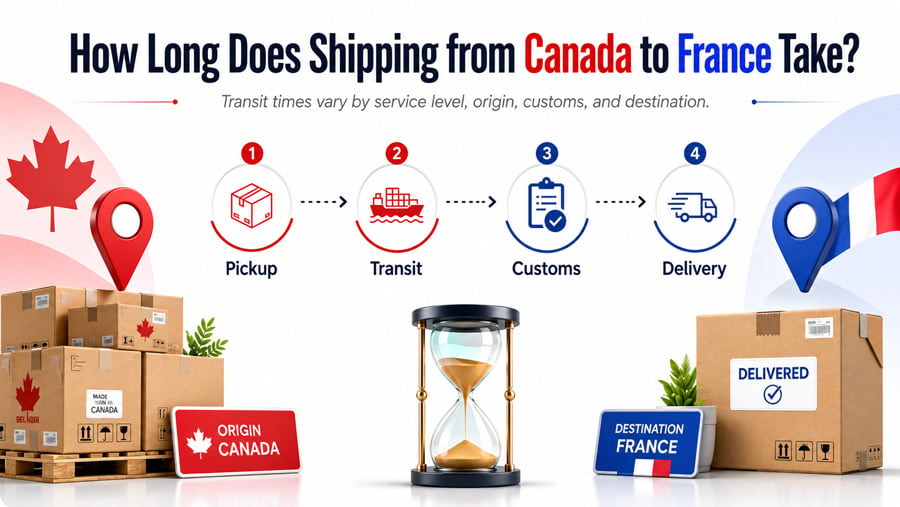
Shipping from Canada to France typically takes 3–5 business days via express courier services and 4–7 business days with standard air shipping, depending on the carrier and service level selected. Economy and deferred options can take 2–3 weeks, while surface shipping may take several weeks depending on transit conditions. Delivery times may also vary based on customs clearance and the final destination within France.
Delivery Time Overview
|
Shipping Method |
Transit Time |
Recommended For |
|
Express Shipping |
3–5 business days |
Urgent shipments |
|
Standard Air |
4–7 business days |
Regular business & eCommerce use |
|
Economy |
2–3 weeks |
Cost-sensitive shipments |
|
Surface Shipping |
Several weeks |
Non-urgent or bulk shipments |
Key Factors That Affect Delivery Time
- Customs clearance (douane): Delays can occur if documents are incomplete
- Shipment type: Large, fragile, or regulated goods may require extra handling
- Destination: Deliveries outside major cities may take longer
- Peak seasons: High shipping volumes can impact transit times
- Weather and logistics: External disruptions may cause delays
How to Get Faster Delivery
- Use express or priority shipping when timing is critical
- Ensure all shipping and customs documents are accurate
- Choose reliable carriers with strong international networks
- Track shipments using real-time updates (numéro de suivi)
Using a platform like Freightcom allows you to compare multiple courier options in real time, helping you select faster delivery options while keeping shipping efficient and cost-effective.
What Affects Delivery Times
Several factors can influence how quickly a shipment reaches France:
- Customs clearance (douane): Missing or incorrect documents can cause delays
- Shipment size and type: Larger or regulated goods may require extra handling
- Final delivery location: Remote or rural areas may take longer
- Peak seasons: High shipping volumes can extend transit times
- Weather and logistics conditions: Unexpected disruptions may affect schedules
How to Avoid Delays
To ensure faster and more predictable delivery:
- Prepare accurate shipping documents, including commercial invoices
- Use services that provide real-time tracking (numéro de suivi)
- Choose the appropriate shipping method based on urgency
- Work with platforms that help optimize shipping routes and carrier selection
By understanding délais de livraison and planning shipments accordingly, both businesses and individuals can improve delivery reliability and reduce unexpected delays when shipping internationally.
Choosing the Right Option
For most shipments, standard air offers the best balance between speed and cost. For urgent deliveries, express services provide the fastest and most predictable transit times.

Shipping from Canada’s Major Cities to France’s Top Destinations
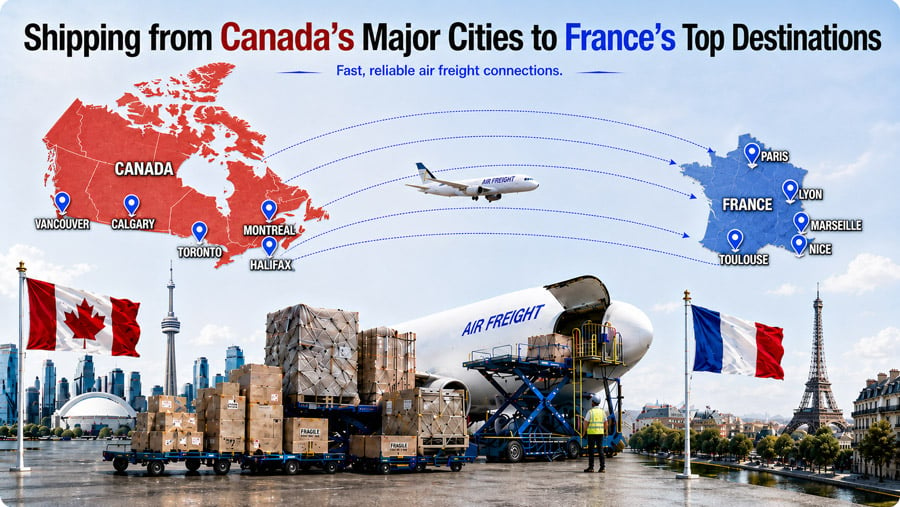
Businesses and individuals across Canada regularly ship packages, eCommerce orders, and commercial goods to major cities throughout France. Whether shipping from Toronto, Vancouver, Montreal, or Calgary, having access to reliable carrier options and efficient international shipping solutions is essential for maintaining smooth delivery operations.
France has several major commercial and logistics hubs, including Paris, Marseille, Lyon, Toulouse, Nice, and Bordeaux, all of which receive high volumes of international shipments from Canada. Choosing the right shipping strategy helps improve delivery efficiency, customs processing, and shipment visibility.
Toronto to Paris Shipping
Toronto is one of Canada’s largest logistics hubs and a major gateway for international shipping to Europe. Businesses shipping from Toronto to Paris benefit from strong carrier access, frequent international flights, and reliable shipping infrastructure for both eCommerce and commercial deliveries.
Montreal to Lyon Shipping
Montreal has strong commercial and cultural ties with France, making it one of the busiest Canadian cities for international shipping to French destinations like Lyon. Businesses can streamline shipping operations by using platforms that provide real-time carrier comparison and centralized shipment management.
Vancouver to Marseille Shipping
Vancouver plays an important role in Western Canada’s international shipping network. Shipments moving from Vancouver to Marseille often include commercial products, retail inventory, and online orders that require reliable transit and customs processing.
Calgary to Toulouse Shipping
Businesses shipping from Calgary to Toulouse often require efficient solutions for commercial goods, industrial products, and specialized shipments. Access to multiple carriers and flexible delivery options helps improve shipping efficiency and visibility.
Ottawa to Nice Shipping
Shipping from Ottawa to Nice supports both personal and business deliveries, especially for eCommerce shipments and consumer goods. Using shipping platforms that provide tracking, automation, and real-time rate comparison can simplify the overall process.
Edmonton to Bordeaux Shipping
Edmonton businesses shipping to Bordeaux benefit from modern international shipping solutions that improve shipment management and delivery performance. Efficient documentation and carrier selection play an important role in reducing delays and maintaining smooth cross-border operations.
Simplifying International Shipping Across Canada and France
No matter which Canadian or French city is involved, using a platform that combines multi-carrier access, discounted shipping rates, tracking, and automation tools can help businesses simplify shipping from Canada to France while improving operational efficiency and delivery reliability.
Shipping Costs to France, What Affects Your Rates
Shipping costs to France can vary significantly depending on several key factors, including shipment size, delivery speed, and the level of service selected. While there is no single fixed rate, understanding how pricing works can help both businesses and individuals make more cost-effective shipping decisions.
One of the primary factors influencing shipping cost is the weight and dimensions of the package. Carriers calculate pricing based on either actual weight or volumetric weight, whichever is greater. Larger packages, even if lightweight, may result in higher shipping rates due to the space they occupy during transit.
Another important factor is the delivery speed. Faster services such as express shipping are positioned at a higher cost level because they prioritize speed, handling, and faster customs processing. Standard and economy options typically offer more cost-efficient alternatives for less time-sensitive shipments.
The shipping method also plays a major role in determining rates. Air-based services are generally faster and more reliable, while different service levels within those options provide flexibility depending on urgency and shipment type.
In addition to transportation costs, duties and taxes in France, including TVA (value-added tax), may apply depending on the type and value of goods being shipped. These charges are usually determined by French customs authorities and can affect the total landed cost of a shipment.
Key Factors That Impact Shipping Rates
- Package weight and size: Heavier and larger shipments cost more to transport
- Delivery speed: Faster services come at a premium level
- Shipping method: Different service types offer varying cost structures
- Customs duties and TVA: Import taxes may apply depending on the shipment
- Destination within France: Remote areas may involve additional delivery steps
How to Optimize Shipping Costs
To manage and reduce shipping costs effectively:
- Compare multiple carrier options before selecting a service
- Choose the appropriate delivery speed based on urgency
- Optimize packaging to reduce unnecessary weight and volume
- Ensure accurate documentation to avoid customs delays or penalties
- Use shipping platforms that provide real-time rate visibility
By understanding how shipping rates are calculated and what factors influence pricing, businesses can make smarter decisions and improve overall shipping efficiency without compromising delivery performance.
How to Get the Cheapest Shipping to France
Finding the cheapest shipping to France is not just about choosing the lowest-priced option, it’s about understanding how to optimize your shipping strategy based on your needs. Businesses and individuals who take a more strategic approach can significantly reduce costs while still maintaining reliable delivery performance.
One of the most effective ways to lower shipping costs is by comparing multiple carrier options. Different carriers offer different pricing structures depending on the shipment size, destination, and service level. Without comparison, it is easy to overpay for services that may not be necessary for your shipment.
Another important factor is selecting the right delivery speed. While express services are ideal for urgent shipments, many deliveries can be handled efficiently using standard or economy options. Choosing a slightly longer delivery window can often lead to more cost-effective shipping without impacting overall customer satisfaction.
Smart Strategies to Reduce Shipping Costs
- Compare real-time rates: Access multiple carrier options to find the most efficient solution
- Optimize packaging: Reduce unnecessary size and weight to avoid higher volumetric charges
- Choose the right service level: Match delivery speed with actual urgency
- Consolidate shipments: Combine multiple orders to reduce per-shipment costs
- Plan ahead: Avoid last-minute shipping decisions that require premium services
Why Rate Comparison Makes the Biggest Difference
Many businesses unknowingly pay more than necessary simply because they rely on a single carrier or fixed pricing model. By using a solution that provides real-time rate comparisons across multiple carriers, it becomes much easier to identify the most cost-effective option for each shipment.
This is where modern shipping platforms play a key role. Instead of manually checking different providers, businesses can instantly compare options, automate label creation, and select the best service based on both cost and delivery time. Over time, this approach leads to significant savings and more efficient shipping operations.
Simplifying Cost Optimization with the Right Tools
For businesses that ship regularly, having access to a platform that combines discounted rates, automation, and multi-carrier access can make a noticeable difference. Rather than focusing only on reducing costs, the goal becomes optimizing the entire shipping process, balancing efficiency, reliability, and scalability.
Solutions like Freightcom are designed to support this approach by giving businesses better visibility into shipping options and helping them make smarter decisions without adding complexity to their workflow.
By focusing on smart decision-making rather than just the lowest price, businesses can consistently achieve more affordable and efficient shipping to France while maintaining a high level of service.

How Tracking Works When Shipping from Canada to France
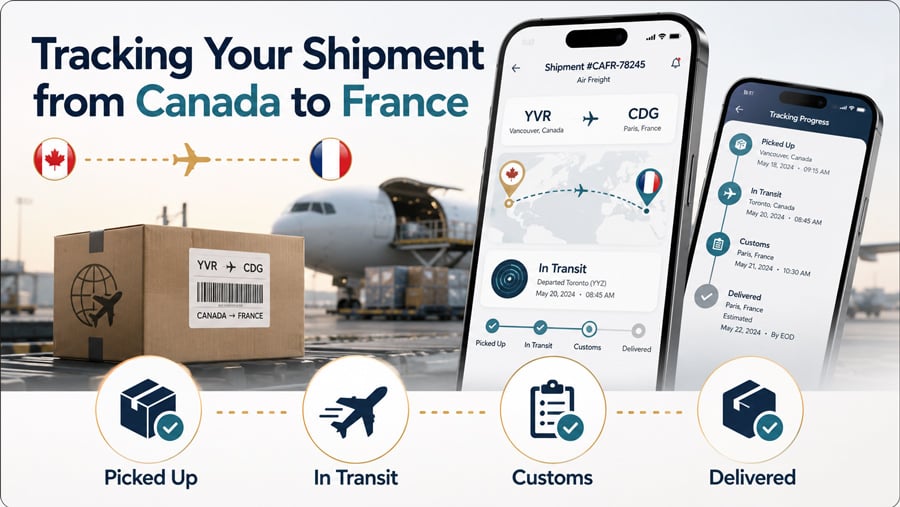
Tracking is one of the most important parts of the shipping process, especially when shipping from Canada to France. Whether you are sending a personal package or managing multiple business shipments, having visibility into where your shipment is and when it will arrive helps reduce uncertainty and improve overall experience.
Once a shipment is created, it is assigned a tracking number (numéro de suivi). This unique identifier allows both the sender and the receiver to monitor the shipment at every stage, from pickup to final delivery. Modern tracking systems provide real-time updates, making it easier to stay informed throughout the entire journey.
What You Can Track During Shipping from Canada to France
With international tracking systems, you can typically monitor:
- Pickup confirmation
- Departure from origin facility
- Transit updates between locations
- Customs clearance (douane) status
- Out-for-delivery notifications
- Final delivery confirmation
This level of visibility is especially important for businesses that need to keep customers informed and manage delivery expectations accurately.
Why Real-Time Tracking Matters
Real-time tracking improves both operational efficiency and customer satisfaction. For businesses, it allows better planning and faster response to potential delays. For customers, it provides peace of mind by offering clear and timely updates.
Without proper tracking, shipments can feel uncertain, especially in international logistics where multiple steps are involved.
How to Improve Shipment Visibility
To get the most accurate tracking experience:
- Use services that provide real-time updates
- Ensure shipment details are entered correctly
- Share tracking information with customers immediately
- Choose carriers known for reliable tracking systems
Simplifying Tracking with the Right Platform
Managing tracking across multiple carriers can become complicated, especially for businesses handling a high volume of shipments. Using a centralized platform that brings all tracking information into one place makes it much easier to monitor shipments without switching between different systems.
With solutions like Freightcom, businesses can track shipments from multiple carriers in a single dashboard, improving visibility and making it easier to manage deliveries efficiently.
By using reliable tracking tools and staying informed throughout the shipping process, both businesses and individuals can ensure a smoother and more transparent delivery experience.
Get Fast & Reliable Shipping Quotes
Customs Clearance (Douane), What You Need to Know
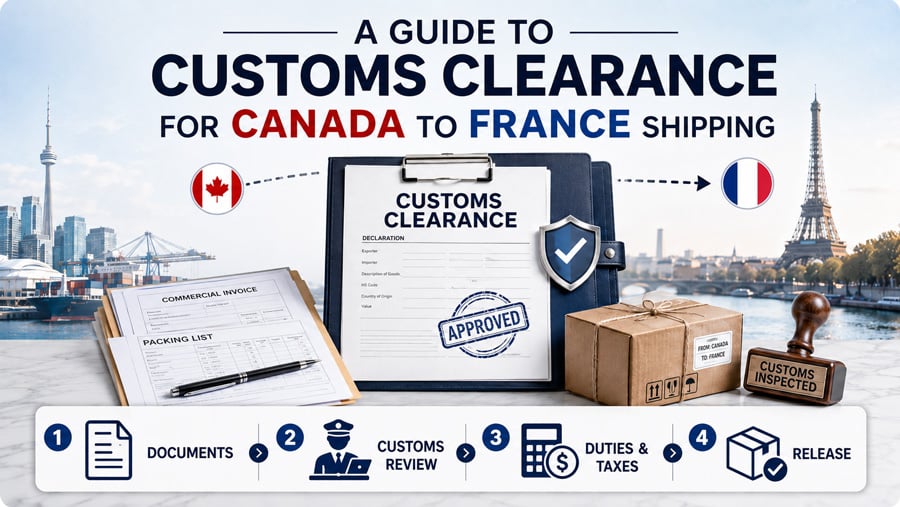
Customs clearance, known as douane in France, is a critical part of international shipping and one of the most common reasons for delays. Every shipment entering France must go through customs to verify its contents, value, and compliance with import regulations. Understanding how this process works can help avoid unnecessary issues and ensure smoother delivery.
When shipping internationally, customs authorities require accurate and complete documentation. This includes details about the contents of the shipment, its declared value, and its intended use. If any of this information is missing or incorrect, shipments may be delayed, inspected, or even returned.
Required Documents for Customs Clearance
To successfully clear customs, shipments typically require:
- Commercial invoice (facture commerciale): Includes item details, value, and sender/receiver information
- HS code (code SH): Used to classify goods for import and determine applicable duties
- Declared value (valeur déclarée): The stated worth of the shipment for customs purposes
- Shipping label and carrier documentation: Ensures proper identification and tracking
Providing accurate documentation is essential for avoiding delays and ensuring that shipments move efficiently through the customs process.
Common Causes of Customs Delays
- Incomplete or incorrect documentation
- Missing HS codes or unclear product descriptions
- Undervalued or overvalued shipments
- Restricted or regulated items requiring additional approvals
Even small errors can result in significant delays, especially during busy shipping periods or when additional inspections are required.
How to Make Customs Clearance Easier
To streamline the customs process and reduce the risk of delays:
- Ensure all documents are complete and accurate
- Use clear and detailed product descriptions
- Apply the correct HS codes for each item
- Avoid under-declaring shipment value
- Work with shipping solutions that help automate documentation
For businesses handling frequent shipments, having a system that simplifies documentation and integrates shipping processes can make a noticeable difference. Tools that support automated paperwork and provide guidance on customs requirements help reduce errors and improve overall efficiency.
By understanding how douane works and preparing shipments properly, both businesses and individuals can avoid delays and ensure a smoother international shipping experience.
Shipping from Canada to France, Why Multi-Carrier Solutions Matter
Managing international shipments can quickly become complex, especially when shipping from Canada to France on a regular basis. Relying on a single carrier or handling shipments manually often leads to higher costs, limited flexibility, and inefficiencies that can slow down operations.
This is where multi-carrier shipping solutions make a significant difference.
Instead of being limited to one provider, businesses can access multiple carriers through a single platform, allowing them to compare shipping options in real time. This flexibility makes it easier to choose the best service based on delivery speed, reliability, and overall efficiency.
Better Rate Visibility and Cost Control
One of the biggest advantages of using a multi-carrier approach is the ability to compare rates instantly. Different carriers offer different pricing depending on shipment size, destination, and urgency.
Having access to real-time rate comparisons helps businesses avoid overpaying and choose the most cost-effective option for each shipment without compromising service quality.
Improved Efficiency Through Automation
Manual shipping processes can slow down operations and increase the risk of errors. Tasks such as generating labels, preparing documents, and tracking shipments can become time-consuming when handled individually.
Automation simplifies these processes by allowing businesses to manage everything from one place. This not only saves time but also improves accuracy and consistency across shipments.
Flexibility and Scalability
As shipping volume grows, businesses need solutions that can scale with them. A multi-carrier system allows for greater flexibility by offering multiple service options without the need to switch between different providers.
This makes it easier to handle increased demand, expand into new markets, and maintain consistent delivery performance.
Centralized Shipping Management
Managing shipments across different carriers can become complicated without a unified system. A centralized platform provides a single dashboard where businesses can:
- Compare shipping options
- Generate labels
- Track shipments in real time
- Manage documentation
This level of control improves visibility and simplifies day-to-day operations.
A Smarter Way to Handle International Shipping
For businesses looking to streamline their shipping process, using a platform like Freightcom provides a more efficient approach. By combining multi-carrier access, discounted rates, and automation tools, it becomes easier to manage shipments while reducing costs and improving delivery performance.
By adopting a multi-carrier strategy, businesses can gain better control over their shipping operations and create a more efficient, scalable process for handling international deliveries.
Optimize Your Shipping Process Today
What You Can Ship from Canada, Restrictions and Prohibited Items
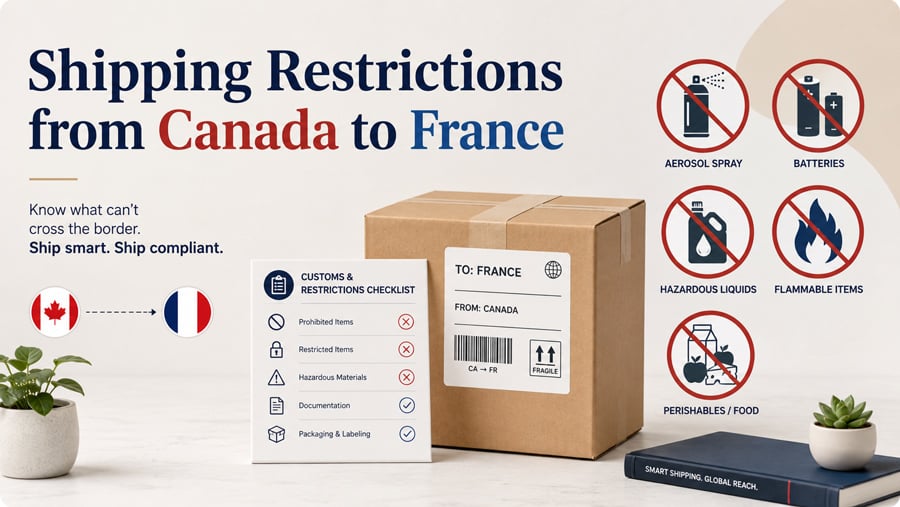
When preparing international shipments, especially when shipping from Canada to France, it’s important to understand that not all items can move freely across borders. Every country enforces import regulations that define what can be shipped, what requires special approval, and what is completely restricted.
Most standard consumer goods, such as clothing, accessories, electronics, and household items, can typically be shipped without major issues as long as they are properly declared. However, certain product categories require closer attention due to safety regulations and customs requirements.
Restricted Items in Cross-Border Shipping
Some goods are allowed but may require additional documentation, certifications, or approvals:
- Food products and perishable items
- Cosmetics and skincare products
- Medical supplies and pharmaceuticals
- Lithium batteries and electronic devices
- Alcohol and regulated beverages
Proper classification, accurate descriptions, and correct documentation are essential to avoid delays during customs clearance.
Prohibited Goods
Certain items are strictly prohibited in international shipping and cannot be sent under any circumstances:
- Hazardous or explosive materials
- Illegal substances or controlled drugs
- Counterfeit or replica products
- Weapons and restricted equipment
- Goods that violate intellectual property laws
Attempting to ship these items can result in confiscation, penalties, or legal complications.
How to Avoid Shipping Issues
To ensure a smooth experience when sending packages internationally from Canada, it’s important to:
- Verify product eligibility before shipping
- Use clear and accurate product descriptions
- Check if permits or certifications are required
- Package and label regulated goods properly
- Stay updated on international shipping regulations
For businesses handling frequent shipments, keeping track of these requirements manually can become complex. Using shipping solutions that help guide compliance and documentation can simplify operations and reduce the risk of delays.
By understanding these restrictions and preparing shipments correctly, both individuals and businesses can avoid unnecessary complications and ensure smoother cross-border delivery.
What Documents You Need When Shipping from Canada to France
One of the most important parts of shipping from Canada to France is preparing the correct documentation. Even if everything else is done properly, missing or incorrect paperwork can delay your shipment at customs or cause unexpected issues during delivery.
Every international shipment must include specific documents that help customs authorities verify what is being shipped, how much it is worth, and where it is going. Whether you are sending a single package or managing regular shipments for a business, having these documents ready ensures a smoother process from pickup to delivery.
Key Documents for Shipping from Canada to France
To avoid delays and ensure smooth customs clearance, you should include:
- Commercial Invoice (Facture commerciale):
This is the most important document. It includes a clear description of the goods, their value, quantity, and the details of both the sender and receiver - Packing List:
Provides a breakdown of what is inside the shipment, including packaging details, weight, and dimensions - Shipping Label:
Ensures the shipment is correctly routed to its destination and includes all delivery information - Tracking Number (Numéro de suivi):
Allows you and your customer to monitor the shipment in real time - Customs Declaration Forms:
Required for customs processing and used to assess duties and taxes
Why Documentation Plays a Critical Role
Accurate documentation helps your shipment move quickly through customs (douane) and reduces the risk of inspections or delays. Customs authorities rely on this information to determine whether the shipment complies with import regulations.
Incorrect or incomplete details, such as vague product descriptions or missing values, can slow down the process and lead to additional checks or charges.
How to Avoid Common Documentation Mistakes
- Use clear and specific product descriptions
- Make sure declared values are accurate and consistent
- Include the correct HS codes for each item
- Double-check all sender and receiver details
- Ensure all documents match each other
Making the Process Easier
For businesses that ship regularly, preparing documents manually can become time-consuming and error-prone. Using a shipping solution that helps automate documentation and organize everything in one place can simplify the entire workflow.
Instead of handling paperwork separately, businesses can generate shipping labels, prepare documents, and manage shipments more efficiently, saving time and reducing the risk of delays.
Having the right documents ready not only speeds up customs clearance but also ensures a more reliable and predictable shipping experience overall.
Duties, Taxes, and VAT (TVA) Explained
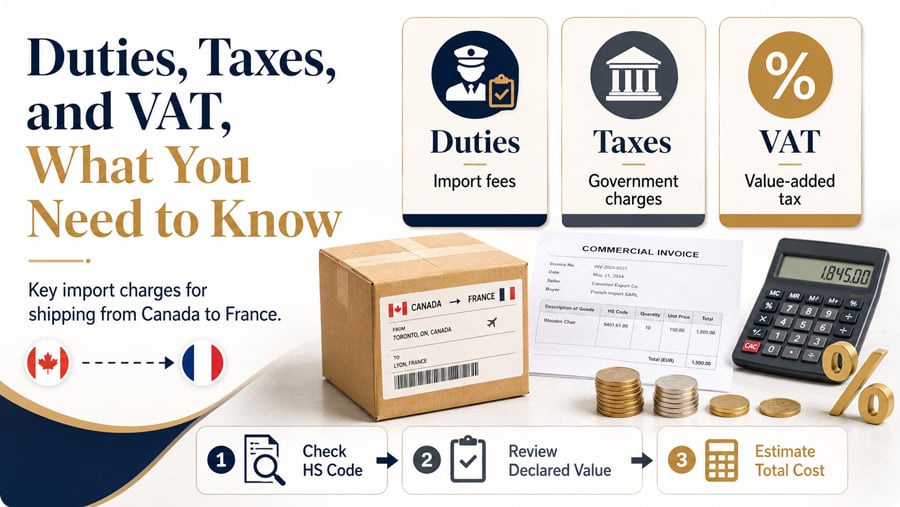
When shipping internationally, transportation is only part of the total cost. Shipments entering France may be subject to duties, taxes, and VAT (TVA), which are determined by customs authorities based on the type and value of goods being imported.
VAT (Taxe sur la Valeur Ajoutée, or TVA) is one of the most important charges to understand. It is applied to most goods entering France and is calculated based on the declared value of the shipment, including shipping costs. The applicable rate depends on the product category, but it is a standard part of importing goods into the European market.
In addition to TVA, customs duties may apply depending on the classification of the product (code SH). These duties vary based on the type of goods and their origin. Some products may benefit from trade agreements, while others may be subject to standard import tariffs.
Who Pays Duties and Taxes
One of the most common questions in international shipping is who is responsible for paying these charges. This depends on the agreed shipping terms:
- DDP (Delivered Duty Paid): The sender covers all duties, taxes, and import charges
- DAP (Delivered at Place): The receiver is responsible for paying duties and taxes upon delivery
Choosing the right option depends on your business model and customer expectations. Many eCommerce businesses prefer DDP to provide a smoother customer experience, while others use DAP to reduce upfront costs.
How Duties and Taxes Affect Total Shipping Cost
Duties and taxes can significantly impact the total landed cost of a shipment. If not planned properly, they may lead to unexpected charges for the receiver, which can cause delivery delays or rejected shipments.
To avoid these issues:
- Clearly communicate shipping terms with the receiver
- Accurately declare shipment value
- Use correct product classifications (HS codes)
- Understand the tax implications before shipping
Making Cost Transparency Easier
For businesses shipping regularly, managing duties and taxes manually can become complex. Having visibility into the total shipping cost, including potential import charges, helps improve customer experience and reduces the risk of surprises at delivery.
Shipping solutions that offer better control over documentation, carrier selection, and shipping terms can help businesses streamline this process. By planning ahead and using the right tools, it becomes much easier to manage VAT and duties efficiently while maintaining smooth international deliveries.
By understanding how TVA, duties, and import charges work, businesses and individuals can better plan shipments and avoid unexpected costs when shipping internationally.
Save on Shipping Costs Today
Best Shipping Methods to France from Canada
Choosing the right shipping method is one of the most important steps when sending goods to France. The best option depends on factors such as delivery urgency, shipment size, and the level of service required. In most cases, air-based shipping solutions are preferred because they offer faster transit times, reliable tracking, and consistent delivery performance.
Air Freight (Fret aérien)
Air freight is the fastest and most efficient way to move goods internationally, especially for time-sensitive or high-value shipments. This method is widely used by businesses that need reliable delivery timelines and minimal delays.
Shipments transported via air freight move between major international airports, which helps reduce transit time and handling complexity. It is ideal for commercial goods, bulk shipments, and inventory replenishment where speed is critical.
Parcel Shipping and Courier Services
Parcel shipping is the most common solution for small to medium-sized packages. Courier services provide door-to-door delivery, real-time tracking, and simplified logistics, making them suitable for both individuals and eCommerce businesses.
This method offers flexibility in service levels, allowing shippers to choose between standard and expedited delivery options. With access to multiple carriers, businesses can compare different solutions and select the most efficient option without managing separate systems.
Express Shipping Options
Express shipping is designed for urgent deliveries that require the fastest possible transit time, typically within a few business days. This option includes priority handling, faster customs processing, and more predictable delivery schedules.
Although express services are positioned at a higher cost level compared to standard options, they are ideal for shipments where speed and reliability are essential.
Choosing the Right Option
Each shipping method offers different advantages, and selecting the right one depends on your specific needs. Businesses that ship regularly benefit from using solutions that allow them to compare multiple delivery options in real time, helping them balance speed, reliability, and overall efficiency without unnecessary complexity.
Common Shipping Problems and How to Avoid Them
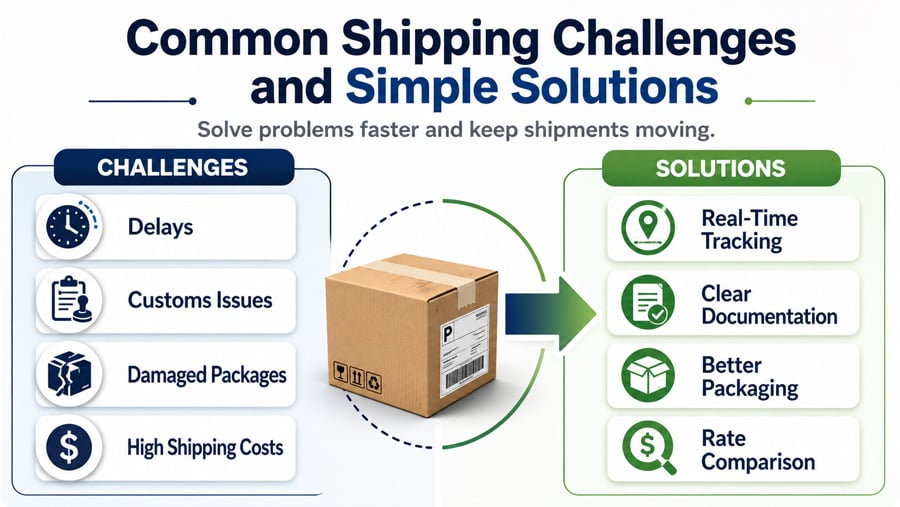
Even with proper planning, challenges can arise when shipping from Canada to France. International logistics involves multiple steps, including transportation, customs clearance, and final delivery, and any disruption along the way can impact the overall timeline.
Understanding the most common shipping problems and how to avoid them can help both individuals and businesses reduce delays, control costs, and improve delivery reliability.
Customs Delays (Douane Issues)
One of the most frequent challenges in international shipping is customs-related delays. These usually happen when documentation is incomplete, incorrect, or unclear.
How to avoid it:
- Provide accurate and detailed product descriptions
- Include correct HS codes and declared values
- Ensure all required documents are complete and consistent
Incorrect or Incomplete Documentation
Missing paperwork or mismatched information across documents can cause shipments to be held or inspected.
How to avoid it:
- Double-check all shipping documents before dispatch
- Keep information consistent across invoices and labels
- Use systems that help automate and validate documentation
Unexpected Costs and Charges
Duties, taxes, and additional handling fees can sometimes come as a surprise, especially if they are not clearly planned in advance.
How to avoid it:
- Understand VAT (TVA) and duty implications before shipping
- Clearly define shipping terms (DDP vs DAP)
- Communicate costs with the receiver ahead of time
Delays in Transit or Delivery
Shipping delays can occur due to weather conditions, peak seasons, or logistical disruptions.
How to avoid it:
- Choose the appropriate service level based on urgency
- Plan shipments ahead of peak periods
- Use carriers with reliable transit performance
Limited Visibility and Tracking Issues
Lack of clear tracking information can create uncertainty for both senders and customers.
How to avoid it:
- Use services that provide real-time tracking updates
- Share tracking numbers (numéro de suivi) with recipients
- Centralize tracking information for easier monitoring
Managing Multiple Carriers Manually
For businesses, handling different carriers separately can lead to inefficiencies, errors, and higher operational costs.
How to avoid it:
- Use a centralized platform to manage all shipments
- Compare carrier options in real time
- Automate repetitive shipping tasks
Platforms like Freightcom help simplify this process by bringing multiple carriers into one system, allowing businesses to streamline operations, reduce errors, and improve overall shipping efficiency.
By identifying these common challenges and taking proactive steps, you can significantly improve the reliability and performance of your international shipments.
Get a Shipping Quote
Shipping from Canada to France, A Step-by-Step Process
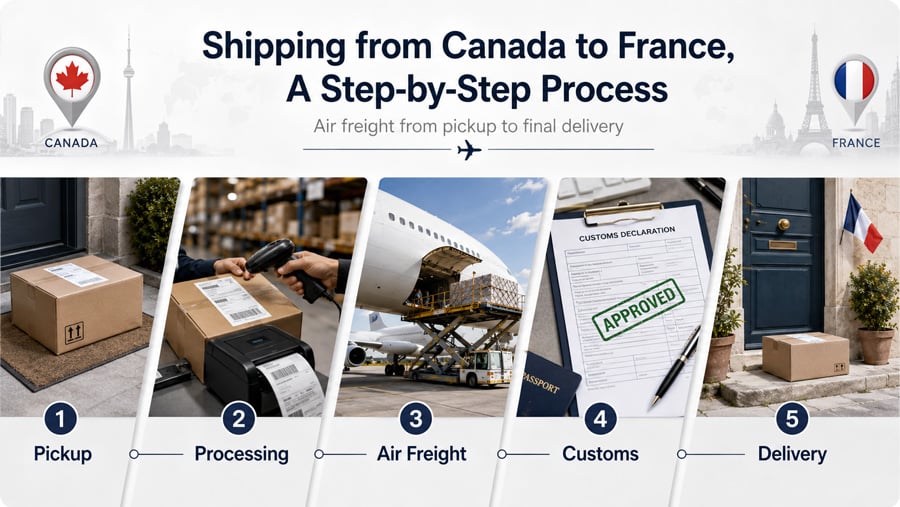
Once you understand the basics, the next step is to follow a clear and structured process. Whether you’re sending a single package or managing multiple shipments, having a defined workflow helps reduce errors and ensures a smoother experience when shipping from Canada to France.
Step 1, Prepare Your Shipment
Start by securely packaging your items to prevent damage during transit. Use appropriate materials based on the type of goods being shipped and ensure everything is properly sealed.
At this stage, you should also gather key information such as product descriptions, quantities, and declared value. This information will be required for both shipping and customs documentation.
Step 2, Choose the Right Shipping Method
Select a shipping option based on your delivery needs. Express services are ideal for urgent shipments, while standard or economy options can provide more cost-efficient solutions for less time-sensitive deliveries.
Choosing the right method early helps balance speed and efficiency without unnecessary costs.
Step 3, Create Your Shipment and Generate Labels
Enter your shipment details, including sender and receiver information, package dimensions, and service level. Once completed, generate your shipping label and attach it securely to the package.
Using a system that allows you to compare carriers and generate labels in one place can make this step significantly faster and more efficient.
Step 4, Complete Customs Documentation
Prepare all required documents, including the commercial invoice (facture commerciale), declared value, and any additional forms needed for customs clearance (douane).
Accurate documentation is essential to avoid delays and ensure that your shipment moves smoothly through customs.
Step 5, Ship and Track Your Package
Once your shipment is ready, it will be picked up or dropped off for transit. You can then monitor its progress using the tracking number (numéro de suivi).
Tracking allows you to stay updated on key stages such as transit, customs clearance, and final delivery.
Step 6, Manage Delivery and Follow-Up
After the shipment reaches its destination, confirm delivery and address any potential issues such as delays or additional charges. For businesses, this step is important for maintaining customer satisfaction and ensuring a smooth post-delivery experience.
Making the Process More Efficient
While the steps above are straightforward, managing them manually can become time-consuming, especially for businesses handling frequent shipments. Using a platform that combines rate comparison, label generation, documentation, and tracking in one place can significantly simplify the process.
With solutions like Freightcom, businesses can streamline their shipping workflow, reduce manual effort, and improve overall efficiency when managing international shipments.
By following a structured process and using the right tools, you can ensure a smoother, faster, and more reliable shipping experience from start to finish.
Frequently Asked Questions About Shipping from Canada to France
How long does shipping from Canada to France take?
Shipping from Canada to France typically takes 3–5 business days via express courier services and 4–7 business days with standard air options, depending on the carrier and service level selected. Economy and deferred services may take 2–3 weeks, while surface shipping can extend to several weeks depending on transit conditions. Delivery times may also vary based on customs clearance and final destination. Using a platform like Freightcom allows you to compare multiple courier options in real time and choose the fastest and most cost-effective delivery solution available.
What is the cheapest way to ship to France?
The most cost-effective way to ship to France depends on the shipment size, weight, and urgency. Instead of relying on a single provider, using a multi-carrier platform like Freightcom allows you to instantly compare the lowest available rates at checkout. By accessing discounted pricing from multiple carriers in one place, businesses can consistently choose the most affordable shipping option while maintaining reliable delivery performance.
Do I have to pay VAT when shipping to France?
Yes, shipments entering France are generally subject to Value Added Tax (VAT or TVA). As of recent EU regulations, VAT applies to most commercial goods regardless of value. The standard rate is typically around 20%, calculated based on the total declared value of the goods, including shipping costs. While customs duties may not apply to lower-value shipments, VAT is almost always required and must be considered when planning international deliveries.
What documents are required for international shipping?
International shipments typically require a Commercial Invoice (detailing the goods and declared value), a Packing List (including weight, dimensions, and contents), and a Shipping Label or Air Waybill for transportation. In some cases, a Certificate of Origin or additional documentation may be required depending on the product type and destination. Accurate and complete documentation is essential to ensure smooth customs clearance and avoid delays.
Can I track my shipment to France?
Yes, shipments can be tracked using a tracking number (numéro de suivi) provided at the time of shipment. With Freightcom, tracking becomes even more efficient by allowing you to monitor shipments from multiple carriers in one centralized dashboard. This provides real-time visibility, consistent updates, and a more streamlined tracking experience without needing to check individual carrier websites.
What items are restricted or prohibited?
Certain items are restricted or prohibited in international shipping and may require special approval or cannot be shipped at all. Prohibited items typically include hazardous materials, explosives, illegal substances, and counterfeit goods. Restricted items, such as food products, cosmetics, batteries, and medical supplies, may require additional documentation or compliance with regulations. Understanding these rules is essential to avoid customs issues and shipment delays.
What affects shipping costs the most?
Shipping costs are mainly influenced by package weight and dimensions (including volumetric weight), delivery speed, shipping distance, and fuel-related surcharges. Faster services and larger shipments generally result in higher costs. Using a platform like Freightcom allows you to compare multiple carriers, access discounted rates, and optimize your shipping strategy, all within one system, helping you control costs more effectively.
How can businesses simplify international shipping?
Businesses can simplify international shipping by using an all-in-one platform like Freightcom that combines multi-carrier access, real-time rate comparison, automated documentation, and shipment tracking. Instead of managing separate systems, everything can be handled in one place, improving efficiency, reducing manual work, and helping scale shipping operations more effectively.
Can I ship commercial goods from Canada to the UK?
Yes, you can ship commercial goods from Canada to the UK, including products for resale, wholesale inventory, and eCommerce orders. These shipments require accurate documentation such as a commercial invoice, proper HS codes, and declared values. Businesses must also consider VAT and potential duties depending on the product category. Using a shipping platform that simplifies documentation and provides carrier options can help ensure smoother delivery and compliance with UK import regulations.
What is the best shipping option for eCommerce orders to the UK?
The best shipping option for eCommerce orders depends on delivery speed, cost, and customer expectations. Express and standard air services are commonly used to balance speed and affordability. For growing businesses, using a platform like Freightcom allows you to compare multiple carriers in real time, access discounted rates, and choose the most efficient option for each order, helping improve delivery performance and customer satisfaction.
Are there size or weight limits when shipping internationally?
Yes, size and weight limits vary depending on the carrier and service selected. Most carriers have maximum limits for package weight and dimensions, and oversized shipments may incur additional handling requirements. Larger or heavier shipments may need to be split into multiple packages or shipped using freight services. Using a multi-carrier solution makes it easier to find the right option based on your shipment size without manually checking each carrier’s restrictions.
Why is shipping from Canada to France a growing opportunity?
Shipping from Canada to France is growing due to strong trade ties and rising cross-border eCommerce demand. France is a key gateway to the European Union, and consumers actively purchase products from international sellers. Businesses that offer fast delivery, reliable tracking, and efficient customs handling can gain a competitive advantage. Using platforms that provide multi-carrier access and real-time rate comparison makes it easier to scale shipping and manage costs effectively.
Start Shipping from Canada to France with Confidence
Shipping from Canada to France involves managing customs documentation, carrier selection, tracking, and delivery expectations efficiently. Choosing the right shipping solution can help reduce delays, improve visibility, and simplify the overall shipping process for both businesses and individuals.
With Freightcom, businesses can access multi-carrier shipping, discounted rates, real-time rate comparison, shipment tracking, and automation tools from one centralized platform, making international shipping more efficient and easier to manage.
Ready to Simplify Your Shipping Process?
Compare real-time shipping rates, streamline international deliveries, and manage shipments more efficiently with Freightcom.
Get a Shipping Quote

.png?width=250&height=58&name=MicrosoftTeams-image%20(28).png "Freightcom")


