



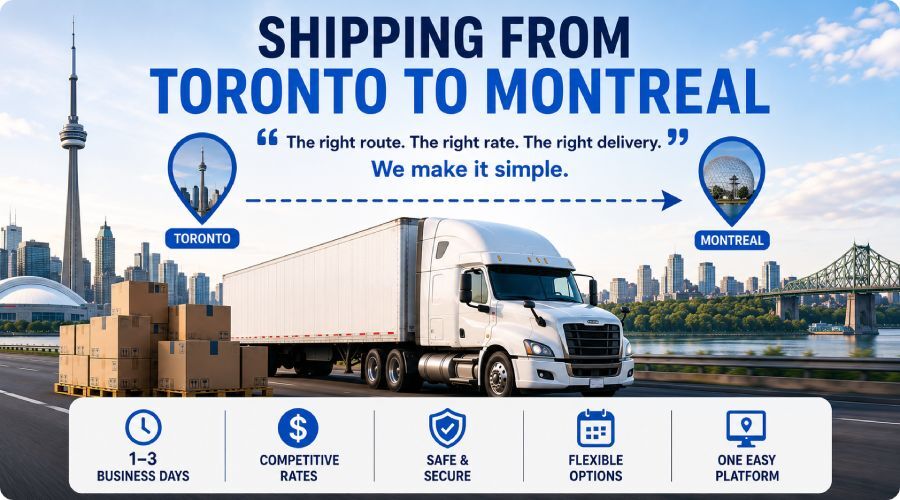
Whether you're shipping a single pallet, multiple skids, or a full truckload, shipping from Toronto to Montreal is one of Canada's busiest and most reliable freight routes. Choosing the right shipping method can help reduce costs, improve delivery times, and ensure your freight arrives safely.
Most shipments arrive within 1 to 3 business days, depending on the carrier, pickup and delivery locations, weather conditions, and any additional services required. Expedited shipping is also available for urgent deliveries.
Shipping costs are influenced by factors such as shipment weight, dimensions, freight class, destination, and accessorial services. Comparing rates from multiple carriers is one of the best ways to save money while maintaining reliable service.
Freightcom makes shipping easier by allowing businesses to compare discounted carrier rates, schedule pickups, track shipments, and manage shipping documents from one platform. The same process also supports shipping from Montreal to Toronto.
Choosing the right shipping solution and preparing your freight properly can help reduce delays, lower costs, and keep your supply chain running efficiently.
Why Shipping Between Toronto and Montreal Matters

Toronto and Montreal are two of Canada’s largest economic centres, making this one of the country’s busiest freight corridors. Thousands of shipments move between the cities each day, supporting manufacturing, retail, healthcare, food and beverage, automotive, construction, eCommerce, and wholesale distribution.
Reliable freight transportation helps businesses maintain inventory, meet production schedules, and deliver customer orders on time. Even a short delay can affect warehouse operations, manufacturing output, and customer satisfaction.
The Toronto–Montreal route benefits from major highways, established carrier networks, freight terminals, and distribution centres across Ontario and Quebec. High shipment volumes also create frequent departures, flexible service options, and competitive carrier rates.
Industries That Commonly Ship Between Toronto and Montreal
Common industries using this freight lane include:
- Manufacturing and industrial equipment
- Retail and wholesale distribution
- Automotive parts
- Food and beverage products
- Medical and healthcare supplies
- Electronics
- Construction materials
- Furniture and home improvement products
- eCommerce and third-party logistics
Whether shipping one pallet or several truckloads, businesses need a solution that balances cost, speed, and reliability.
Why Businesses Use the Toronto–Montreal Freight Corridor
This route offers several advantages:
- Frequent carrier departures
- Competitive freight rates
- Typical transit times of one to three business days
- LTL, FTL, parcel, and expedited shipping options
- Strong logistics infrastructure in both cities
Toronto to Montreal and Back Again
Although this guide focuses on shipping from Toronto to Montreal, many businesses also move freight in the opposite direction. The same carriers, shipping methods, and booking tools can simplify shipping from Montreal to Toronto when inventory or customer demand requires it.
Understanding this freight corridor helps businesses reduce costs, improve delivery performance, and keep their supply chains running efficiently.
Shipping Options from Toronto to Montreal
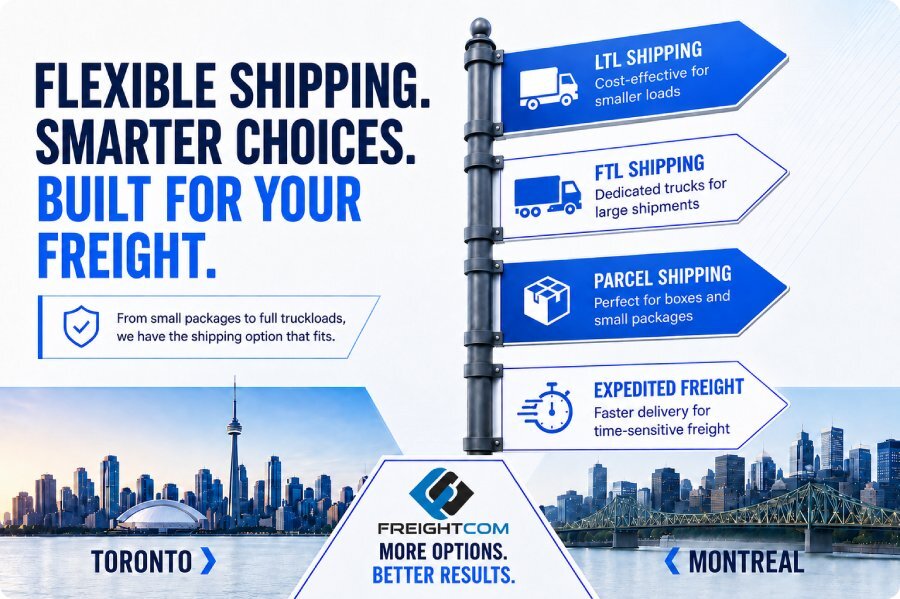
The best method for shipping from Toronto to Montreal depends on your shipment’s size, weight, urgency, budget, and delivery requirements. Choosing the right service can reduce costs while helping your freight arrive safely and on time.
Less-Than-Truckload (LTL) Shipping
LTL shipping is ideal when your freight does not require a full trailer. Your shipment shares space with other freight moving along the same route, making it a cost-effective option for smaller loads.
LTL is often best for:
- 1 to 6 pallets
- Freight weighing about 150 to 15,000 lbs
- Businesses seeking lower shipping costs
- Shipments that do not require a dedicated truck
Because Toronto–Montreal is a busy freight corridor, LTL services are widely available. Freightcom also lets businesses compare multiple carrier options in one place.
Full Truckload (FTL) Shipping
FTL shipping is better suited to larger shipments that fill most or all of a trailer. Your freight travels on a dedicated truck, which means less handling and more direct transportation.
FTL may be the right choice for:
- 10 or more pallets
- Oversized or heavy freight
- Fragile or high-value goods
- Tight delivery schedules
- Shipments requiring dedicated capacity
Although FTL is more expensive for smaller loads, it can provide better value and efficiency for larger shipments.
Parcel Shipping
Parcel shipping is usually the simplest option for individual boxes and lightweight packages. It is commonly used for eCommerce orders, documents, replacement parts, and small commercial products.
As shipments become larger or heavier, LTL shipping may offer better value.
Expedited Freight Shipping
Expedited freight is designed for urgent or time-sensitive deliveries. Depending on the carrier, it may include faster pickup, fewer transfers, and priority transit.
It is often used for:
- Emergency inventory
- Manufacturing components
- Medical equipment
- Critical replacement parts
- Time-sensitive freight
Expedited shipping costs more, but it can help prevent costly delays.
Which Shipping Option Is Right for You?
- LTL shipping: Best for 1 to 6 pallets and cost-conscious freight shipments.
- FTL shipping: Best for large loads that need dedicated transportation.
- Parcel shipping: Best for lightweight boxes and small eCommerce orders.
- Expedited freight: Best for urgent shipments requiring faster delivery.
Comparing carrier rates, transit times, and service levels before booking can help you choose the most suitable option. Freightcom simplifies this process by providing access to multiple trusted carriers through one platform.

How Long Does Shipping from Toronto to Montreal Take?

One of the most common questions businesses ask is, "How long does shipping from Toronto to Montreal take?" While the answer depends on the shipping service and carrier you choose, most freight shipments arrive within 1 to 3 business days.
The Toronto–Montreal corridor is one of Canada's busiest freight routes, with frequent carrier departures and well-established transportation networks. This allows shipments to move efficiently between the two cities while offering businesses multiple service options based on their delivery requirements.
Typical Transit Times
Although transit times can vary, the following is a general guideline:
- LTL Shipping: Typically 1–3 business days
- FTL Shipping: Usually 1–2 business days
- Parcel Shipping: Often 1–2 business days
- Expedited Freight: Same day or next business day may be available, depending on the shipment and carrier
Keep in mind that these are estimated transit times and may vary based on pickup schedules, delivery locations, and carrier availability.
What Can Affect Shipping Times?
Several factors can influence how quickly your shipment reaches its destination, including:
- Pickup and delivery postal codes
- Freight type, size, and weight
- Residential versus commercial locations
- Appointment or scheduled deliveries
- Weather and seasonal road conditions
- Traffic and unexpected transportation delays
- Additional services such as liftgate delivery or inside delivery
For example, a pallet being delivered to a commercial warehouse with a loading dock will typically move faster than a shipment going to a residential address that requires a liftgate and scheduled appointment.
Can Expedited Shipping Reduce Transit Times?
Yes. If your shipment is time-sensitive, expedited freight services can significantly reduce delivery times.
Expedited shipping prioritizes your freight, allowing for faster pickups, fewer handling points, and quicker transportation. While this service usually comes at a higher cost, it can be the right solution for urgent inventory replenishment, manufacturing components, medical supplies, or other critical shipments where delays aren't an option.
How to Keep Your Shipment Moving on Time
There are several simple steps you can take to help avoid unnecessary delays:
- Package and label your freight correctly.
- Ensure shipment details and dimensions are accurate.
- Have your Bill of Lading (BOL) ready before pickup.
- Choose the appropriate shipping service for your timeline.
- Book your shipment as early as possible, especially during peak seasons.
Planning ahead and selecting the right carrier can make a noticeable difference in both delivery speed and overall shipping experience.
Whether you're shipping from Toronto to Montreal or occasionally arranging freight from Montreal to Toronto, using a platform like Freightcom allows you to compare carrier transit times, choose the service that best matches your delivery schedule, and track your shipment from pickup to delivery—all from a single, easy-to-use dashboard.
How Much Does Shipping from Toronto to Montreal Cost?
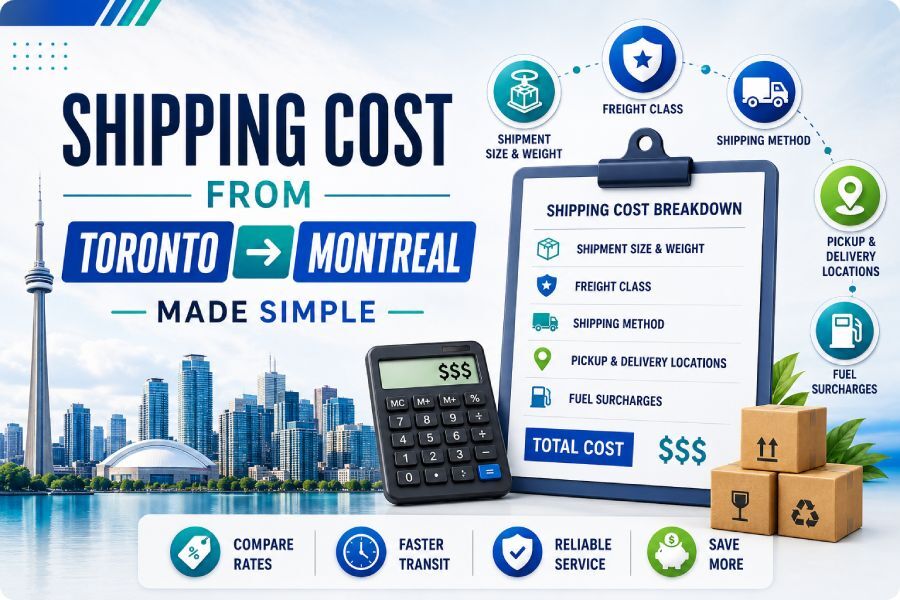
The cost of shipping from Toronto to Montreal can vary widely depending on the type of shipment and service you choose. There is no single fixed price, but businesses can generally expect smaller shipments to cost less, while larger freight loads and faster delivery services come at a higher price.
Average Cost to Ship from Toronto to Montreal
The total shipping cost will usually depend on the type of freight being moved. In general:
- Parcel shipping: Best suited to smaller boxes and lightweight packages
- LTL shipping: Often the most economical option for one or several pallets
- FTL shipping: Typically more expensive because the entire truck is dedicated to one shipment
- Expedited shipping: Usually carries a premium for faster delivery
For businesses shipping regularly between Toronto and Montreal, LTL is often a practical choice for smaller palletized loads, while FTL may offer better value when the shipment is large enough to require most or all of a trailer.
How Much Does LTL Shipping from Toronto to Montreal Cost?
LTL shipping is commonly used for shipments that do not require an entire truck. Because your freight shares trailer space with other shipments, the overall cost is generally lower than booking a dedicated truck.
LTL is commonly used for:
- One or more pallets
- Smaller commercial freight shipments
- Regular business-to-business deliveries
- Shipments where keeping transportation costs lower is a priority
How Much Does FTL Shipping from Toronto to Montreal Cost?
FTL shipping normally costs more than LTL because the truck is reserved for your shipment. However, it can become more cost-effective for larger loads that would otherwise take up most of an LTL trailer.
FTL may make more sense for:
- Large pallet quantities
- Full or nearly full trailer loads
- High-volume freight
- Shipments that benefit from dedicated transportation
How to Find the Exact Shipping Cost
Because shipping prices can vary between carriers and service levels, the most accurate way to determine your Toronto-to-Montreal shipping cost is to request a quote using your actual shipment details.
Comparing multiple quotes allows you to quickly see:
- Available carrier rates
- Different shipping services
- Estimated transit times
- The overall cost of each option
Freightcom allows businesses to compare available carrier rates and shipping services in one place, making it easier to see how much shipping from Toronto to Montreal will cost before booking.

What Affects Shipping Costs?
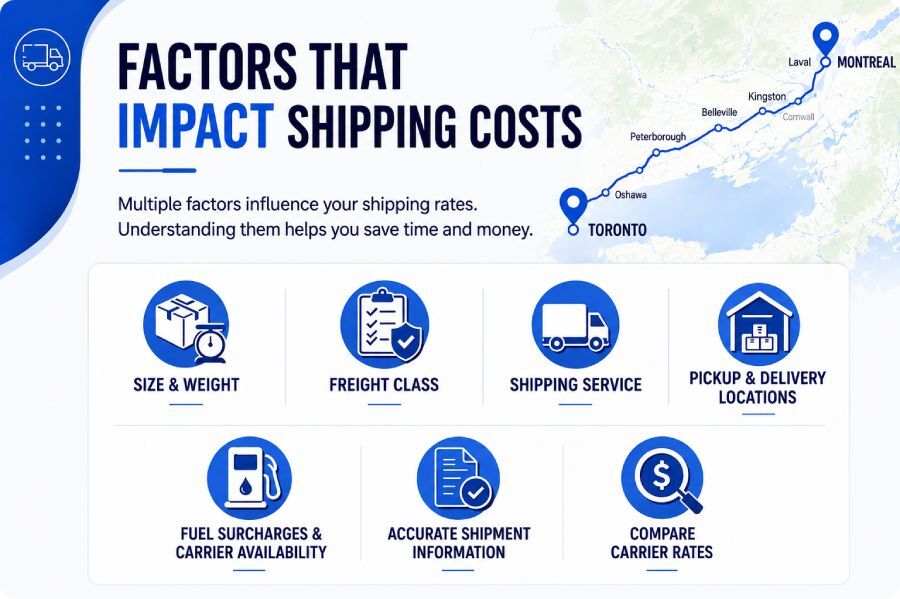
The cost of shipping from Toronto to Montreal depends on more than distance. Two similar shipments can have different rates based on their size, service type, destination, and other shipment details.
Understanding these factors can help you estimate shipping costs more accurately and avoid unexpected charges.
Shipment Size and Weight
Dimensions and weight are two of the biggest pricing factors. Larger or heavier shipments occupy more trailer space and typically cost more to transport.
Providing accurate measurements when requesting a quote also helps prevent billing adjustments after pickup.
Freight Class
For LTL shipping, freight class plays a major role in pricing. It is based on factors such as density, handling requirements, liability, and stowability.
Using the correct freight class helps avoid reclassification fees and unexpected costs.
Shipping Service
The shipping method you choose directly affects the price.
- LTL shipping is usually the most economical option for smaller freight.
- FTL shipping is often better suited to large shipments.
- Expedited freight provides faster delivery at a higher cost.
Selecting the right service ensures you're paying only for what your shipment requires.
Pickup and Delivery Locations
Commercial locations with loading docks are generally less expensive to service than residential addresses.
Additional services that may increase shipping costs include:
- Liftgate service
- Inside pickup or delivery
- Appointment delivery
- Limited access locations
Fuel Surcharges and Carrier Availability
Most carriers apply fuel surcharges, which change as fuel prices fluctuate. Shipping rates may also increase during peak seasons when carrier capacity is limited.
Booking shipments in advance can often provide better pricing and more scheduling flexibility.
Provide Accurate Shipment Information
Before booking, verify your:
- Weight
- Dimensions
- Freight class
- Pickup and delivery addresses
- Required accessorial services
Accurate information helps carriers provide reliable quotes and reduces the risk of additional charges.
Compare Carrier Rates
Rates can vary significantly between carriers for the same shipment. Comparing multiple quotes allows you to find the best combination of price, transit time, and service.
Freightcom simplifies this process by allowing businesses to compare trusted carriers, book shipments, and manage freight through one convenient platform.
Choosing the Right Shipping Method for Shipping from Toronto to Montreal
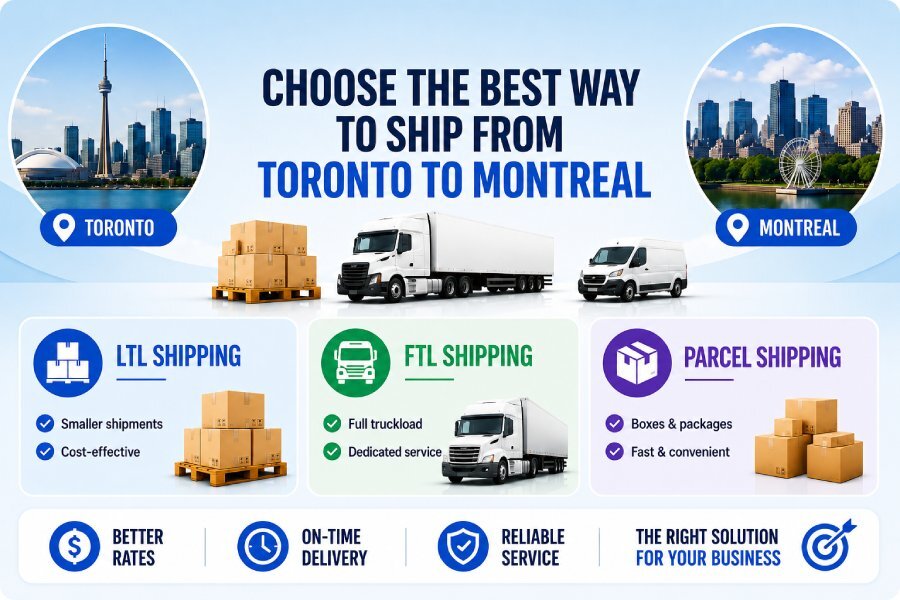
Choosing the right shipping method depends on your shipment's size, weight, budget, and delivery timeline. While LTL, FTL, and parcel shipping all move freight between Toronto and Montreal, each is designed for different shipping needs.
Choose LTL Shipping If...
LTL shipping is ideal when your freight doesn't require a full trailer.
Choose LTL if you:
- Are shipping 1 to 6 pallets
- Want to reduce shipping costs
- Ship smaller loads regularly
- Don't require dedicated transportation
LTL offers an excellent balance of affordability and reliable transit times for many businesses.
Choose FTL Shipping If...
FTL shipping is best for larger shipments that require a dedicated truck.
Choose FTL if you:
- Have 10 or more pallets
- Are shipping oversized or heavy freight
- Need direct transportation
- Are shipping fragile or high-value goods
With fewer handling points, FTL can also reduce the risk of damage.
Choose Parcel Shipping If...
Parcel shipping is the right choice for lightweight shipments that don't require palletization.
Choose parcel shipping if you:
- Are shipping one or more boxes
- Operate an eCommerce business
- Need an affordable shipping solution for small packages
For larger or heavier shipments, LTL freight is often the more cost-effective option.
Which Shipping Option Is Best?
As a general rule:
- Boxes and small packages: Parcel shipping
- 1 to 6 pallets: LTL shipping
- Large or full trailer loads: FTL shipping
- Urgent shipments: Expedited freight
If you're unsure which option is right, comparing carrier rates, transit times, and service levels can help you make the best decision. Freightcom makes this easy by bringing multiple trusted carriers together on one platform, helping businesses find the right balance of cost, speed, and reliability.
Freight Class Explained
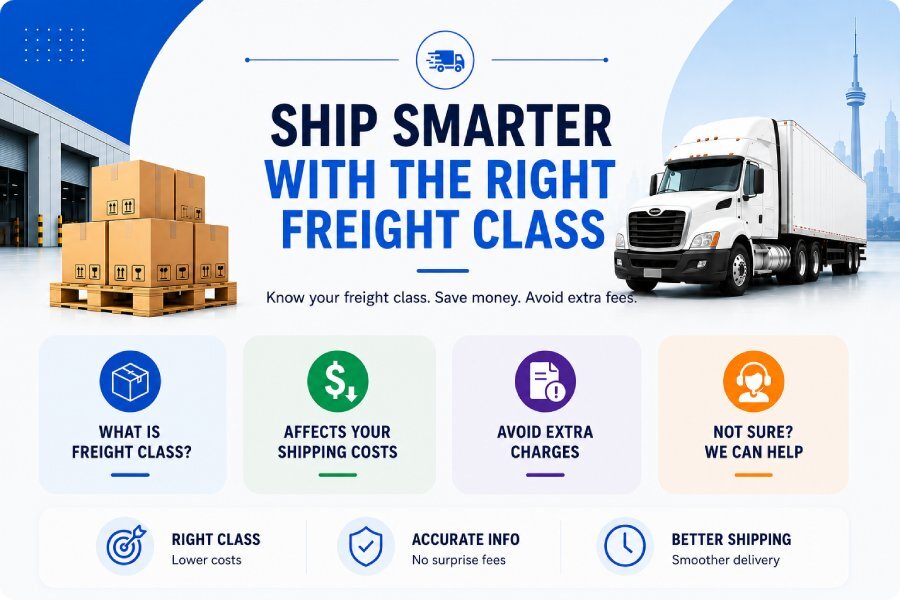
If you're using LTL shipping from Toronto to Montreal, understanding freight class is important because it directly affects your shipping costs. Using the correct freight class helps avoid unexpected charges, billing adjustments, and shipping delays.
What Is Freight Class?
Freight class is a standardized system used by LTL carriers to classify shipments based on how easy they are to transport.
It is determined by factors such as:
- Density
- Dimensions
- Value
- Handling requirements
- Liability
- Stacking ability (stowability)
These characteristics help carriers calculate shipping rates and determine how freight should be handled.
How Freight Class Affects Shipping Costs
Lower freight classes generally cost less because shipments are denser and easier to transport. Higher freight classes usually cost more because the freight may be bulky, fragile, or require additional handling.
For example, a dense pallet of metal parts may have a lower freight class than a large pallet of lightweight furniture, even if both weigh the same.
Avoid Reclassification Fees
Providing inaccurate shipment details is one of the most common shipping mistakes.
If the weight, dimensions, or freight class don't match the carrier's measurements, your shipment may be reclassified, resulting in additional charges.
Before booking, verify:
- Weight
- Dimensions
- Freight class
- Number of pallets or packages
Accurate shipment information helps ensure more reliable pricing and a smoother shipping experience.
Do You Need to Know Your Freight Class?
Not always. If you're unsure, Freightcom can help simplify the process. By providing accurate shipment details, you can receive more accurate pricing while reducing the risk of reclassification fees.
Understanding the basics of freight class can help you make smarter shipping decisions and better manage the cost of shipping from Toronto to Montreal.
Packaging and Palletizing Best Practices for Shipping from Toronto to Montreal
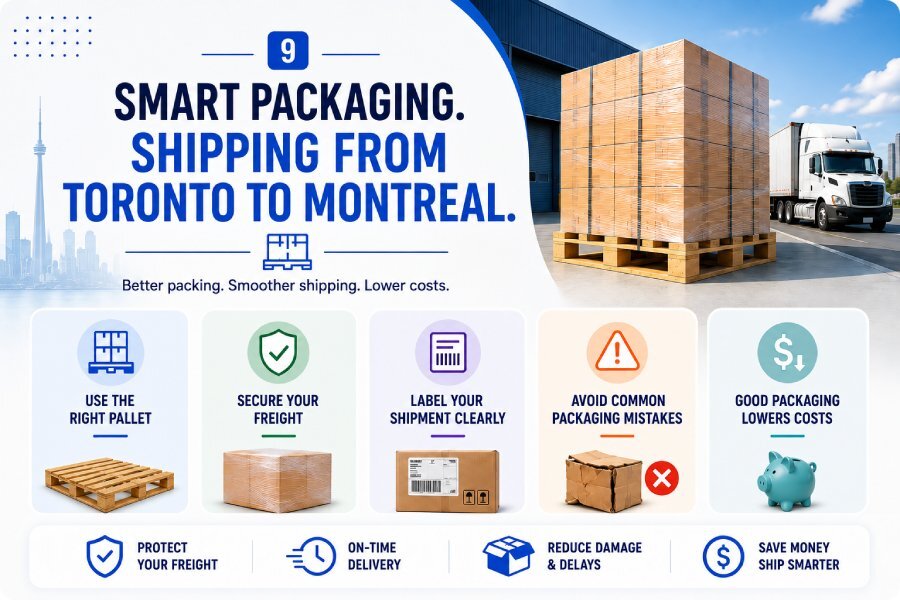
Proper packaging protects your freight, reduces the risk of damage, and can even lower the cost of shipping from Toronto to Montreal. Whether you're shipping one pallet or multiple skids, preparing your shipment correctly helps ensure it arrives safely and on time.
Choose the Right Pallet
A strong, stable pallet is the foundation of every shipment.
For best results:
- Use pallets in good condition.
- Make sure they can support the shipment's weight.
- Avoid broken or damaged pallets.
- Distribute weight evenly across the load.
Secure and Protect Your Freight
Stack boxes evenly, place heavier items on the bottom, and avoid overhanging the pallet. Secure the load using appropriate materials such as:
- Stretch wrap
- Straps or bands
- Corner protectors
- Protective padding for fragile items
Properly securing the shipment helps prevent movement and damage during transit.
Label Your Shipment Clearly
Attach clear, easy-to-read labels to every pallet or package. Accurate labeling helps carriers identify, track, and deliver your shipment more efficiently.
Avoid Common Packaging Mistakes
To reduce the risk of damage and additional charges, avoid:
- Damaged pallets
- Overhanging boxes
- Loose or unsecured freight
- Incorrect package dimensions
- Packaging that's too weak for the shipment
Good Packaging Can Lower Shipping Costs
Efficient packaging isn't just about protection—it can also reduce shipping costs. Accurate dimensions, stable palletizing, and efficient use of space can improve pricing, particularly for LTL shipping.
If you're unsure how to prepare your shipment, Freightcom provides access to shipping resources and trusted carriers to help ensure your freight is ready for safe, efficient transportation.
How to Prepare Your Shipment Before Pickup
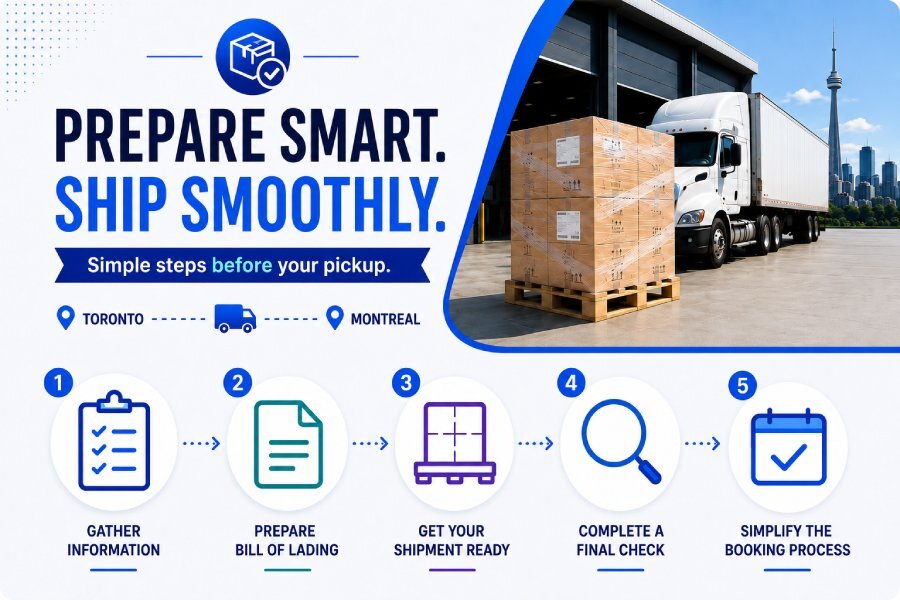
Proper preparation helps ensure shipping from Toronto to Montreal goes smoothly. Having accurate shipment information and the right documents ready can reduce delays, prevent additional charges, and keep your freight moving on schedule.
Gather Your Shipment Information
Before requesting a quote or booking a pickup, have the following ready:
- Pickup and delivery addresses
- Number of pallets or packages
- Weight and dimensions
- Type of goods
- Preferred pickup date
Providing accurate information helps you receive a more reliable shipping quote.
Prepare Your Bill of Lading (BOL)
The Bill of Lading (BOL) is the primary shipping document for freight shipments. It typically includes:
- Shipper and receiver information
- Shipment description
- Weight and dimensions
- Number of pallets or packages
- Freight class (if applicable)
- Special handling instructions
Review the BOL carefully before pickup to avoid delays or billing adjustments.
Get Your Shipment Ready
Before the carrier arrives:
- Fully wrap and label your shipment.
- Place it near the loading area.
- Keep access clear for loading equipment.
- Ensure someone is available during pickup.
If you're shipping to or from a residential address, mention this during booking, as services such as liftgate delivery or appointment scheduling may be required.
Complete a Final Check
Before confirming your shipment, verify:
- Weight and dimensions
- Pickup and delivery addresses
- Labels and packaging
- Required accessorial services
Taking a few minutes to review these details can help prevent delays and unexpected charges.
Simplify the Booking Process
Freightcom makes it easy to compare carrier rates, schedule pickups, generate shipping documents, and track shipments from one platform, helping businesses save time and ship more efficiently between Toronto and Montreal.

Tracking Your Freight Shipment
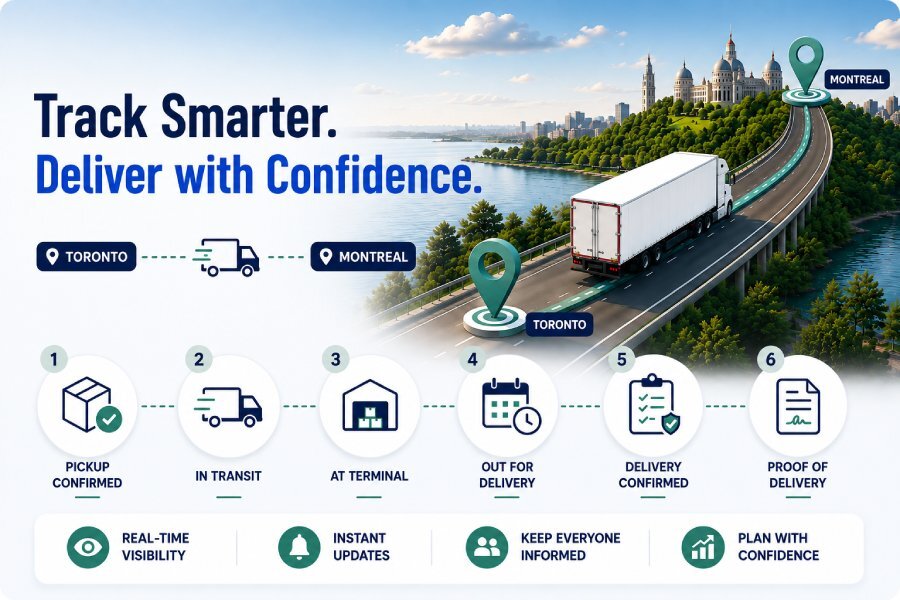
Tracking gives businesses better visibility throughout shipping from Toronto to Montreal. It helps you monitor progress, estimate delivery times, communicate with customers, and respond faster if delays occur.
Why Freight Tracking Matters
Shipment tracking can help businesses:
- Monitor freight in transit
- Estimate delivery times
- Keep customers and staff informed
- Plan warehouse and inventory operations
- Identify possible delays earlier
For frequent shippers, this visibility can improve overall supply chain efficiency.
What You Can Track
Depending on the carrier, tracking updates may include:
- Pickup confirmation
- Shipment status
- Terminal arrivals and departures
- Estimated delivery date
- Delivery confirmation
- Proof of Delivery (POD)
What Is Proof of Delivery?
A Proof of Delivery (POD) confirms that the shipment reached its destination. It may include the delivery date, receiver’s name or signature, and delivery location.
Businesses often keep POD records for customer service, inventory management, and internal documentation.
What Happens If a Shipment Is Delayed?
Weather, traffic, mechanical issues, or other unexpected events can occasionally affect delivery times. Tracking updates help you understand the shipment’s status and communicate the latest information to customers or team members.
Manage Tracking in One Place
Freightcom allows businesses to book shipments, monitor tracking updates, and manage freight from one dashboard. This makes it easier to stay organized whether you’re shipping from Toronto to Montreal or moving freight in the opposite direction.
Reliable tracking is not just about knowing where your shipment is. It also supports better planning, clearer communication, and more efficient freight management.
Freight Insurance and Carrier Liability

Even with proper packaging and careful handling, unexpected events can occur during transit. Understanding the difference between carrier liability and freight insurance helps businesses better protect shipments when shipping from Toronto to Montreal.
What Is Carrier Liability?
Carrier liability is the responsibility a carrier has for your freight while it's in transit. However, it doesn't automatically cover the full value of every shipment.
Coverage depends on factors such as:
- Shipment type
- Carrier terms and conditions
- Cause of the loss or damage
- Applicable transportation regulations
For this reason, businesses shouldn't assume they'll receive full reimbursement if a shipment is lost or damaged.
What Is Freight Insurance?
Freight insurance provides additional protection beyond standard carrier liability. It can be especially valuable when shipping:
- High-value products
- Electronics
- Medical equipment
- Fragile goods
- Custom or difficult-to-replace items
For many businesses, the cost of insurance is small compared to the potential cost of replacing valuable inventory.
When Should You Consider Freight Insurance?
Additional coverage may be worth considering if your shipment:
- Has a high replacement value
- Contains fragile products
- Includes important customer orders
- Would be expensive or difficult to replace
- Is time-sensitive
Reduce the Risk of Damage
Good shipping practices remain the best way to protect your freight. Always:
- Use strong pallets
- Package freight securely
- Label shipments clearly
- Provide accurate shipment details
- Choose the appropriate shipping service
Ship with Greater Confidence
Freightcom offers optional shipment protection to help businesses choose the level of coverage that best fits their freight. Understanding your coverage options allows you to better manage risk and ship with greater confidence between Toronto and Montreal.
Common Shipping Challenges When Shipping from Toronto to Montreal
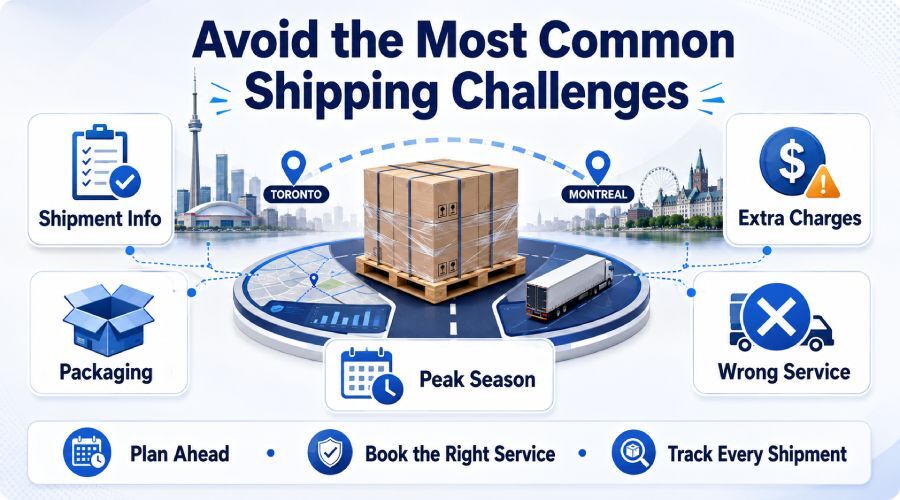
Even on a busy freight route like shipping from Toronto to Montreal, delays and unexpected costs can occur. Fortunately, most common shipping problems can be avoided with proper planning and accurate shipment information.
Incorrect Shipment Information
Providing inaccurate shipment details can lead to billing adjustments and delays.
Before booking, verify:
- Weight and dimensions
- Number of pallets or packages
- Freight class (for LTL shipments)
- Pickup and delivery addresses
Poor Packaging
Weak pallets, unsecured freight, or overhanging boxes increase the risk of damage during transit.
Using quality packaging materials and securing your shipment properly helps protect your freight from pickup to delivery.
Unexpected Accessorial Charges
Additional services can increase shipping costs if they aren't requested when booking. Common examples include:
- Liftgate service
- Residential pickup or delivery
- Appointment delivery
- Inside delivery
- Limited access locations
Including these requirements upfront helps avoid unexpected fees.
Choosing the Wrong Shipping Service
Selecting the wrong shipping method can increase costs or delay delivery. LTL, FTL, parcel, and expedited shipping each serve different needs, so choosing the right option is important.
Shipping During Peak Seasons
Carrier capacity may be limited during holidays, severe winter weather, or other busy periods. Booking early can help secure better availability and reduce delays.
Track Your Shipment
Tracking allows you to monitor your shipment, stay informed, and respond quickly if delays occur.
Reduce Shipping Problems
You can prevent many common issues by:
- Providing accurate shipment information
- Packaging freight securely
- Requesting required accessorial services
- Choosing the appropriate shipping method
- Booking early during peak seasons
- Tracking your shipment from pickup to delivery
Freightcom helps simplify shipping from Toronto to Montreal by allowing businesses to compare carriers, book shipments, and track freight through one easy-to-use platform.

How to Reduce Shipping Costs When Shipping from Toronto to Montreal
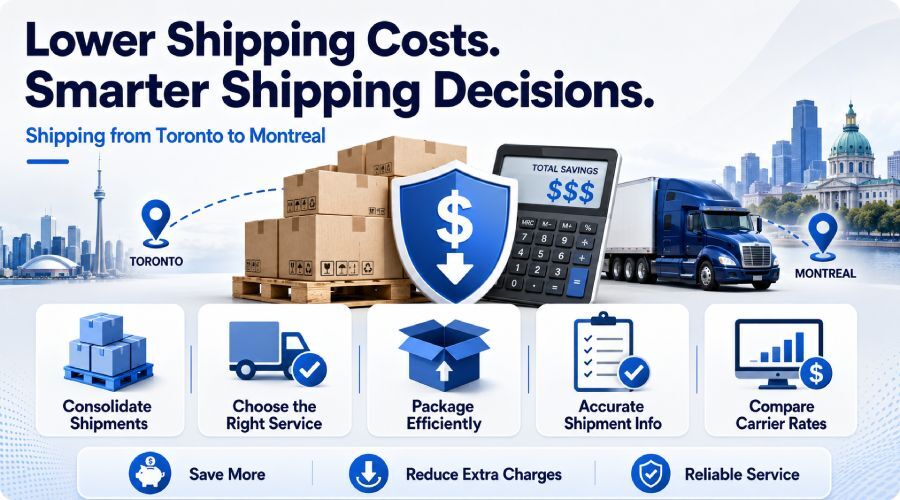
Reducing the cost of shipping from Toronto to Montreal isn't just about finding the lowest rate. Choosing the right shipping strategy can help lower costs while maintaining reliable service.
Consolidate Shipments
If you're sending multiple orders to the same destination, combine them whenever possible. Consolidating shipments can reduce transportation costs, handling fees, and the number of pickups.
Choose the Right Shipping Method
Selecting the appropriate shipping service helps avoid unnecessary expenses.
- LTL shipping: Best for smaller palletized freight
- FTL shipping: Best for large or full trailer loads
- Parcel shipping: Ideal for lightweight packages
- Expedited freight: Best for urgent shipments
Package Freight Efficiently
Proper packaging can lower shipping costs by reducing wasted trailer space. Using the correct pallet size, minimizing excess packaging, and stacking freight securely can also help prevent damage during transit.
Provide Accurate Shipment Information
Incorrect weights, dimensions, or freight class can result in additional charges. Always verify:
- Weight and dimensions
- Number of pallets
- Freight class
- Pickup and delivery details
Compare Carrier Rates
Shipping rates vary between carriers. Comparing multiple quotes helps you find the best balance of price, transit time, and service.
Use Technology to Save Time and Money
Freightcom allows businesses to compare discounted carrier rates, book shipments, generate shipping documents, and track freight through one platform. This simplifies shipping while helping businesses make more cost-effective decisions.
By choosing the right shipping method, preparing freight properly, and comparing carrier options, businesses can consistently reduce the cost of shipping from Toronto to Montreal without sacrificing reliability.
Seasonal Shipping Considerations for Shipping from Toronto to Montreal
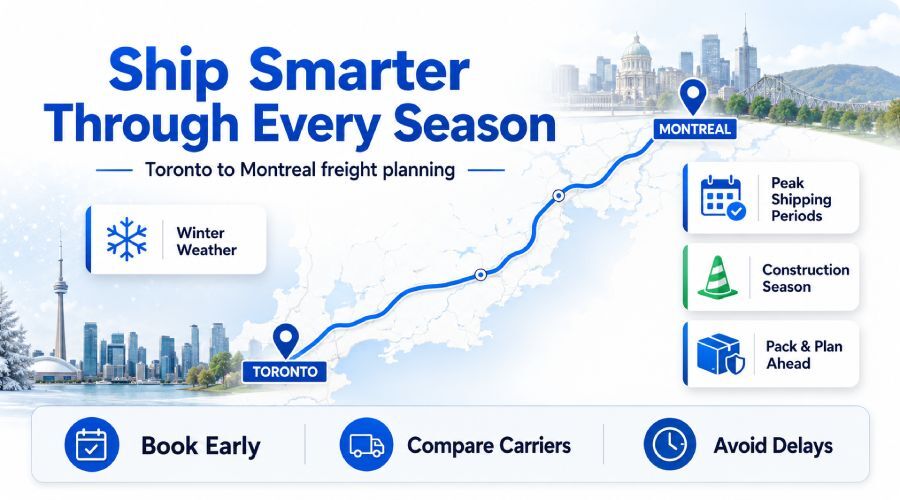
Seasonal conditions can affect transit times, carrier capacity, and shipping costs when shipping from Toronto to Montreal. Planning ahead helps businesses reduce delays and keep deliveries on schedule.
Winter Weather
Snow, freezing rain, icy roads, and poor visibility can slow freight movement between Ontario and Quebec. During winter, allow extra time for important shipments and avoid relying on last-minute bookings.
Peak Shipping Periods
Carrier demand often increases during:
- Black Friday and Cyber Monday
- The holiday season
- Back-to-school periods
- End-of-year inventory replenishment
- Major retail promotions
Higher demand can limit trailer capacity and affect pricing. Booking early may improve carrier availability and pickup options.
Construction Season
Spring and summer roadwork can also create delays along major highways between Toronto and Montreal. Allowing extra transit time can help protect time-sensitive deliveries.
Plan and Package for Seasonal Conditions
For urgent freight:
- Book several days in advance.
- Confirm pickup availability.
- Consider expedited shipping when necessary.
- Avoid peak-period last-minute bookings.
Weather-resistant packaging, secure palletizing, and proper stretch wrapping can also help protect freight from moisture and temperature changes.
Compare Carrier Options
If one carrier has limited capacity, comparing alternatives may help prevent delays. Freightcom gives businesses access to multiple Canadian carriers, making it easier to compare rates, transit times, and available services throughout the year.
By booking early, packaging freight properly, and staying flexible with carrier options, businesses can manage Toronto-to-Montreal freight shipping more reliably in every season.
Why Businesses Choose Freightcom for Shipping from Toronto to Montreal
.jpg?width=900&height=498&name=Businesses%20Choose%20Freightcom%20for%20Shipping%20from%20Toronto%20to%20Montreal(1).jpg)
Choosing the right shipping platform can make shipping from Toronto to Montreal more efficient, flexible, and cost-effective. Freightcom gives businesses access to multiple trusted Canadian carriers through one convenient platform.
Compare Carrier Rates in One Place
Instead of requesting quotes from carriers individually, Freightcom lets businesses compare rates, transit times, and services in minutes. This makes it easier to choose the option that best fits your shipment, budget, and delivery timeline.
Access Competitive Shipping Rates
Freightcom provides access to discounted carrier rates that can help businesses reduce transportation costs, especially when shipping regularly between Toronto and Montreal.
Book and Manage Shipments Online
From one dashboard, businesses can:
- Compare shipping options
- Get quotes
- Schedule pickups
- Generate shipping documents
- Track shipments
Keeping everything in one place saves time and simplifies day-to-day shipping.
Choose from Multiple Shipping Services
Freightcom supports a range of shipping options, including:
- LTL shipping
- FTL shipping
- Parcel shipping
- Expedited freight
- Cross-border shipping
This flexibility makes it easier to choose the right service for each shipment.
Track Freight from Pickup to Delivery
Freightcom’s tracking tools help businesses monitor shipment progress, stay informed, and communicate more effectively with customers.
Manage Shipping Across Canada
Although this guide focuses on shipping from Toronto to Montreal, Freightcom also supports shipments between other Canadian cities, including Montreal to Toronto.
By combining carrier comparisons, online booking, discounted rates, and shipment tracking, Freightcom gives businesses a simpler way to manage freight from start to finish.
How to Ship from Toronto to Montreal with Freightcom
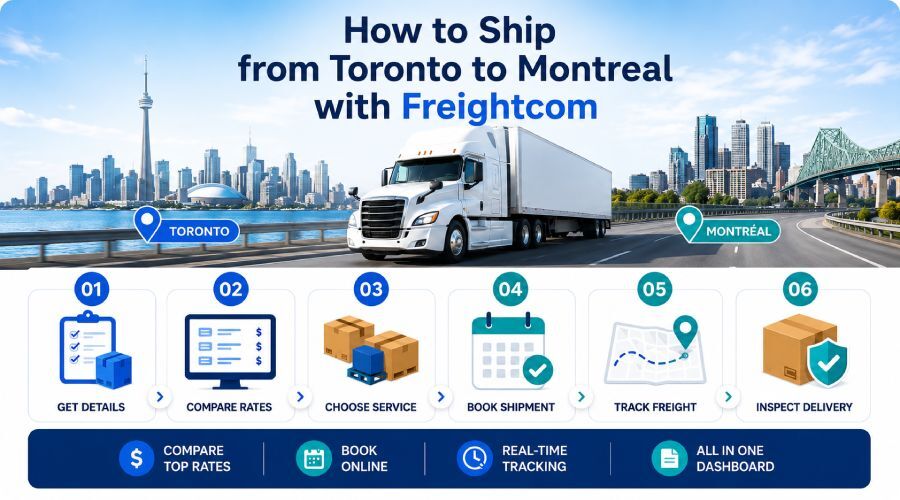
Shipping freight from Toronto to Montreal can be completed in a few simple steps. Freightcom brings multiple trusted carriers together on one platform, making it easier to compare rates, book shipments, and manage delivery.
Step 1: Gather Your Shipment Details
Before requesting a quote, prepare:
- Pickup and delivery addresses
- Weight and dimensions
- Number of pallets or packages
- Type of goods
- Preferred pickup date
Accurate details help improve pricing and reduce unexpected charges.
Step 2: Compare Carrier Rates
Enter your shipment information to compare:
- Shipping rates
- Transit times
- Available services
- Carrier options
Reviewing multiple quotes helps you choose the best balance of cost, speed, and reliability.
Step 3: Select the Right Service
Choose the service that fits your shipment:
- LTL shipping for smaller palletized freight
- FTL shipping for dedicated truckloads
- Parcel shipping for lightweight packages
- Expedited freight for urgent deliveries
Step 4: Book Your Shipment
Select your preferred carrier, schedule the pickup, and confirm that all shipment details are correct.
Before booking, verify the weight, dimensions, addresses, required services, and packaging.
Step 5: Track Your Freight
Once the shipment is picked up, tracking updates can help you monitor progress, estimate delivery times, and confirm delivery.
Step 6: Inspect the Delivery
When the freight arrives in Montreal, inspect it before signing. Check for visible damage and confirm the shipment matches the documents.
Keep a copy of the Proof of Delivery (POD) for your records.
Freightcom simplifies shipping from Toronto to Montreal by allowing businesses to compare carriers, book online, generate documents, and track freight from one dashboard. The same process can also support shipping from Montreal to Toronto.

Frequently Asked Questions About Shipping from Toronto to Montreal
The following FAQs address some of the most common questions businesses have about shipping from Toronto to Montreal. These clear, direct answers are designed to help readers make informed shipping decisions while also covering related queries that commonly appear in Google search results and AI-powered platforms.
How long does shipping from Toronto to Montreal take?
Most shipments arrive within 1 to 3 business days, depending on the selected shipping service, pickup and delivery locations, weather conditions, and carrier schedules. Expedited freight options may also be available for urgent shipments.
How much does shipping from Toronto to Montreal cost?
Shipping costs depend on several factors, including shipment weight, dimensions, freight class, shipping method, fuel surcharges, and any additional services required. The most accurate way to estimate the cost is to request a quote using your specific shipment details.
What is the cheapest way to ship from Toronto to Montreal?
For palletized freight, LTL (Less-Than-Truckload) shipping is often the most cost-effective option because several shipments share space in the same trailer. For smaller boxes and lightweight packages, parcel shipping is usually the most affordable choice.
What is the best shipping option for large shipments?
If your shipment fills most or all of a trailer, Full Truckload (FTL) shipping is generally the best option. It provides dedicated transportation, fewer handling points, and more direct delivery.
Can I ship a single pallet from Toronto to Montreal?
Yes. Shipping a single pallet is very common, and LTL shipping is specifically designed for freight that does not require an entire truck.
Do I need a pallet for freight shipping?
Not always. Smaller packages can often be shipped using parcel services. However, palletizing larger or heavier shipments improves stability, makes handling easier, and helps protect the freight during transit.
What information do I need to get a freight quote?
Most carriers require:
- Pickup and delivery locations
- Shipment weight
- Dimensions
- Number of pallets or packages
- Type of goods being shipped
- Preferred pickup date
Providing complete and accurate information helps ensure the quote reflects the actual shipment.
What is freight class, and why does it matter?
Freight class is mainly used for LTL shipping and plays an important role in determining shipping rates. It considers factors such as density, handling requirements, liability, and stowability. Using the correct freight class can help prevent reclassification fees and unexpected charges.
What is a Bill of Lading (BOL)?
A Bill of Lading (BOL) is the main shipping document used in freight transportation. It includes shipment details, pickup and delivery information, a description of the goods, and any important handling or transportation instructions.
Can I track my shipment?
Yes. Most freight shipments include tracking, allowing you to monitor the shipment from pickup through delivery. Tracking visibility helps businesses stay informed and manage customer expectations more effectively.
Should I purchase freight insurance?
It depends on the value and type of goods being shipped. While carriers usually provide limited liability coverage, businesses transporting high-value, fragile, or difficult-to-replace products often choose additional freight insurance for greater protection.
What are accessorial services?
Accessorial services are additional services beyond standard pickup and delivery. Common examples include:
- Liftgate service
- Residential delivery
- Appointment delivery
- Inside delivery
- Limited-access service
These services may increase the overall shipping cost.
How can I reduce shipping costs?
You may be able to lower shipping expenses by:
- Choosing the right shipping method
- Packaging freight efficiently
- Providing accurate shipment information
- Consolidating shipments
- Comparing rates from multiple carriers
Even small improvements can lead to meaningful savings over time.
Can I schedule recurring shipments?
Yes. Many businesses ship regularly between Toronto and Montreal. Scheduling recurring shipments can simplify logistics, improve planning, and create a more consistent shipping process.
Is shipping from Montreal to Toronto the same process?
Yes. Although this guide focuses on shipping from Toronto to Montreal, the booking process, shipping options, and available carrier services are generally similar for shipping from Montreal to Toronto.
What industries commonly ship between Toronto and Montreal?
This freight corridor supports many industries, including manufacturing, retail, healthcare, automotive, food and beverage, construction, wholesale distribution, and eCommerce.
Can I ship oversized or heavy freight?
Yes. Oversized and heavy freight can often be transported using FTL or specialized freight services. The best solution depends on the shipment’s dimensions, weight, handling needs, and transportation requirements.
Why should I compare carrier rates before booking?
Freight rates, transit times, and available services can vary between carriers. Comparing several options helps you find the best balance between price, delivery speed, and service quality.
Why do businesses use Freightcom for shipping from Toronto to Montreal?
Freightcom gives businesses access to multiple trusted carriers through one platform, making it easy to compare rates, book shipments, generate shipping documents, and track freight from pickup to delivery. Instead of managing several carrier accounts, businesses can simplify the shipping process while selecting the service that best fits each shipment.
How do I get started with shipping from Toronto to Montreal?
Getting started is straightforward. Gather your shipment details, compare available carrier options, select the service that fits your needs, and schedule the pickup. A multi-carrier shipping platform like Freightcom can simplify the process while providing access to competitive rates and reliable shipping services.
Final Thoughts on Shipping from Toronto to Montreal
Shipping from Toronto to Montreal is an important part of many Canadian supply chains. Whether you’re moving one pallet or managing regular truckload shipments, the right strategy can help reduce costs, improve delivery performance, and keep operations running smoothly.
Successful freight shipping depends on choosing the right service, providing accurate shipment details, preparing freight properly, and comparing carrier options. These steps can help prevent delays, avoid unexpected charges, and improve the overall shipping experience.
Freightcom brings multiple trusted carriers, discounted rates, online booking, shipping documents, and tracking together in one platform. This gives businesses the flexibility to select the service that best fits each shipment.
The same platform can also support shipping from Montreal to Toronto and other routes across Canada as your shipping needs grow.
To simplify your next shipment, compare carrier rates and available services with Freightcom before booking.


.png?width=250&height=58&name=MicrosoftTeams-image%20(28).png "Freightcom")


