



.jpg?width=902&height=375&name=Shipping-from-Canada-to-Germany-Header%20(1).jpg)
Shipping from Canada to Germany requires understanding more than just transportation. Businesses must consider air freight options, shipping costs, transit time, customs procedures, and Germany’s Import VAT (Einfuhrumsatzsteuer).
For most commercial shipments, air freight is the preferred method due to its speed, reliability, and predictable delivery timelines. However, total landed cost depends on factors such as chargeable weight, fuel surcharges, Customs clearance (Zollabfertigung), and documentation requirements like the Commercial Invoice (Handelsrechnung).
This guide explains how to ship from Canada to Germany, how air freight pricing works, how long delivery takes, and what customs regulations exporters must prepare for. Whether you are moving industrial goods, automotive components, electronics, or eCommerce inventory, proper planning ensures smooth delivery and cost control.
How to Ship from Canada to Germany
Shipping from Canada to Germany can be arranged through three primary methods:
- Air freight
- Ocean freight
- Express courier services
For commercial cargo, air freight is typically the most practical option. It offers faster transit compared to ocean freight and greater flexibility than parcel-based courier services.
Most air freight shipments depart from major Canadian airports such as Toronto, Montreal, or Vancouver and arrive in Germany at hubs like Frankfurt or Munich, where goods enter the German customs system.
Step 1: Define Your Shipment Requirements
Before booking air freight to Germany, confirm:
- Total weight and dimensions
- Type of goods
- Required delivery timeline
- Preferred Incoterms (DDP or DAP)
- Responsibility for duties and Import VAT (Einfuhrumsatzsteuer)
Clear shipment details allow accurate rate calculation and smoother customs processing.
Step 2: Select the Appropriate Air Freight Service
Air freight services generally fall into three categories:
- Express air freight for urgent shipments
- Standard air freight for routine commercial cargo
- Consolidated air freight for cost efficiency
The right service level depends on urgency, shipment size, and budget.
Step 3: Prepare Required Documentation
All commercial shipments to Germany must include:
- Commercial Invoice (Handelsrechnung)
- Air Waybill (Frachtbrief)
- Accurate HS codes
- Importer’s EORI number
Incomplete documentation is one of the most common causes of delays during Customs clearance (Zollabfertigung).
Step 4: Plan for Duties and Taxes
Shipments entering Germany are subject to:
- Customs duties (based on HS classification)
- Import VAT (Einfuhrumsatzsteuer), generally 19 percent
Depending on the agreed Incoterms, these charges are paid by either the seller or the buyer.
Shipping from Canada to Germany becomes straightforward when shipment details, documentation, and tax planning are addressed before departure. Air freight provides the speed and reliability most businesses require, but proper preparation ensures that advantage is not lost during customs processing.
Air Freight from Canada to Germany – Fastest Shipping Method Explained
Air freight is the fastest and most reliable method for shipping from Canada to Germany. While ocean freight may reduce cost for very large and non-urgent shipments, most businesses choose air cargo when speed, predictability, and supply chain efficiency matter.
Germany is one of Canada’s largest trading partners in Europe. Frequent cargo routes between major Canadian and German airports make air freight a practical solution for commercial exporters.
Why Businesses Choose Air Freight
Air freight is commonly selected because it offers:
- Shorter transit times
- Predictable delivery schedules
- Reduced cargo handling
- Lower exposure to damage
- Faster inventory turnover
For companies operating under just-in-time production or tight inventory cycles, reducing transit from weeks to days provides a competitive advantage.
Major Air Freight Routes
Shipments typically depart from:
- Toronto Pearson (YYZ)
- Montréal–Trudeau (YUL)
- Vancouver (YVR)
- Calgary (YYC)
Arrivals in Germany most often occur at:
- Frankfurt (FRA)
- Munich (MUC)
- Hamburg (HAM)
- Berlin (BER)
Frankfurt serves as Germany’s primary cargo hub, with strong connections across the European Union.
Types of Air Freight Services
When shipping from Canada to Germany, exporters typically choose:
Express air freight
Priority handling and fastest transit times, ideal for urgent cargo.
Standard air freight
Balanced cost and speed for routine commercial shipments.
Consolidated air freight
Shared cargo space for lower rates, with slightly longer transit schedules.
Selecting the right service level depends on urgency, cargo value, and budget.
Common Goods Shipped by Air from Canada to Germany
Air freight from Canada to Germany is commonly used for goods that are high-value, time-sensitive, or critical to supply chains. Faster transit times and reduced handling make air cargo ideal for products that require reliable and predictable delivery.
Common goods shipped by air include:
• Automotive components, such as sensors, engine parts, and electronic modules needed to prevent production delays.
• Industrial machinery parts used for equipment repairs or urgent manufacturing needs.
• Electronics and technology products, including semiconductors, computer components, and telecommunications equipment.
• Pharmaceutical products and medical supplies, which often require secure and time-sensitive transport.
• Aerospace equipment and aircraft components, where rapid delivery supports maintenance and operational schedules.
• eCommerce inventory, especially high-value goods shipped to fulfillment centers for faster European distribution.
In general, air freight is preferred when speed, reliability, and lower transit risk are more important than minimizing transportation cost.
Air Freight and Door-to-Door Service
Many businesses require more than airport-to-airport transport. Door-to-door air freight solutions can include:
- Pickup in Canada
- Air cargo booking
- Customs clearance (Zollabfertigung)
- Duty and Import VAT (Einfuhrumsatzsteuer) coordination
- Final delivery in Germany
Shipping under Delivered Duty Paid (DDP) may simplify the process by arranging tax and duty payment before delivery.
When Ocean Freight May Be Considered
Ocean freight may be appropriate when:
- Shipment volume is extremely large
- Delivery timeline is flexible
- Minimizing transportation cost is the priority
However, ocean transit from Canada to Germany can take several weeks. For most commercial exporters prioritizing speed and reliability, air freight remains the preferred method.
Strategic Value of Air Freight
Efficient air freight plays an important role in modern international supply chains. For businesses shipping from Canada to Germany, faster transportation can help maintain consistent operations, respond quickly to market demand, and support reliable delivery timelines.
Air freight supports:
• Faster market entry
• Reduced production downtime
• Improved customer satisfaction
• More responsive inventory management
For companies that ship from Canada to Germany on a regular basis, structured air freight planning helps improve operational efficiency, maintain supply chain stability, and support long-term cost control.
Shipping Cost from Canada to Germany
.jpg?width=1000&height=509&name=shipping-cost-canada-germany%20(1).jpg)
One of the most common questions businesses ask is:
How much does shipping from Canada to Germany cost?
Air freight pricing depends primarily on chargeable weight, service level, and customs-related charges. Beyond transportation cost, shipments are also subject to duties and Import VAT (Einfuhrumsatzsteuer), which affect total landed cost.
What Determines Air Freight Cost?
Air freight rates are influenced by:
- Chargeable weight (actual vs dimensional weight)
- Departure and arrival airports
- Service level (express or standard)
- Fuel surcharges
- Airport handling fees
- Customs duties
- Import VAT (Einfuhrumsatzsteuer)
Because these variables fluctuate, accurate pricing requires confirmed shipment details.
Chargeable Weight: Actual vs Dimensional
Air freight is billed based on the higher of:
- Actual weight
- Dimensional weight (volume-based calculation)
Large but lightweight shipments may be charged based on dimensional weight rather than scale weight.
Optimizing packaging to reduce unused space can significantly lower shipping costs.
Fuel Surcharges and Handling Fees
Air freight rates typically include:
- Fuel surcharges
- Security fees
- Airport handling charges
- Documentation processing fees
These costs vary based on market conditions and airline capacity.
Comparing multiple carrier options can help identify more competitive pricing.
Duties and Import VAT
In addition to freight charges, goods entering Germany are subject to:
- Customs duties (based on HS code classification)
- Import VAT (Einfuhrumsatzsteuer), generally 19 percent
Import VAT is calculated on the total customs value, which includes:
- Product value
- Freight cost
- Insurance (if applicable)
- Customs duty
Understanding this calculation is critical for accurate landed cost forecasting.
DDP vs DAP Cost Impact
Incoterms determine who pays duties and taxes.
Delivered Duty Paid (DDP)
The seller covers duties and Import VAT (Einfuhrumsatzsteuer) before delivery.
Delivered at Place (DAP)
The buyer pays duties and VAT upon arrival.
Choosing the appropriate term affects cash flow, pricing strategy, and customer experience.
Example of Landed Cost Structure
A typical landed cost calculation includes:
- Air freight transportation
- Fuel and handling surcharges
- Customs duty (if applicable)
- Import VAT (Einfuhrumsatzsteuer)
- Brokerage or clearance fees
For commercial exporters, evaluating total landed cost is more important than focusing solely on freight rate per kilogram.
How to Obtain Accurate Air Freight Pricing
To receive precise air freight rates from Canada to Germany, provide:
- Exact weight and dimensions
- Cargo description
- Pickup and delivery locations
- Preferred Incoterms
- Required service level
Real-time rate comparison tools simplify pricing analysis and help businesses secure competitive air freight options.
How Long Does Shipping from Canada to Germany Take?

Air freight from Canada to Germany typically takes 2 to 7 business days, depending on service level and routing. While flight time is short, total delivery includes export processing, customs review, and final delivery.
Standard Air Freight Transit Time
Standard air freight generally takes 3 to 7 business days.
This timeline includes:
- Pickup and export handling in Canada
- Air transport to Germany
- Customs clearance (Zollabfertigung)
- Final delivery
Standard service balances cost and speed, making it suitable for most commercial shipments.
Express Air Freight Transit Time
Express air freight typically delivers within 2 to 4 business days.
This option includes:
- Priority cargo handling
- Faster routing
- Reduced layovers
Express service is best for urgent shipments such as critical parts or time-sensitive inventory.
Factors That Affect Transit Time
Although air freight is fast, several operational factors can still affect how quickly shipments arrive from Canada to Germany. While the flight itself takes only a short time, the overall delivery process also includes export handling, airport operations, customs review, and final delivery. Delays may occur when capacity is limited, airports are congested, or documentation needs verification.
Factors that can affect transit time include:
• Flight availability and seasonal demand
• Weather disruptions
• Airport congestion
• Documentation accuracy
• Customs clearance (Zollabfertigung) efficiency
Incomplete paperwork is one of the most common causes of delays.
Customs Processing in Germany
Upon arrival, shipments must be reviewed by German Customs (Zoll).
Clearance may take:
- Same-day release when documentation is accurate
- 1 to 2 business days for standard processing
- Longer if inspection is required
Providing a complete Commercial Invoice (Handelsrechnung), correct HS codes, and valid EORI number helps avoid delays.
Air Freight vs Ocean Freight Timeline
For comparison:
- Air freight: approximately 2 to 7 business days
- Ocean freight: typically 3 to 6 weeks
For businesses prioritizing speed and predictable delivery, air freight remains the preferred shipping method from Canada to Germany.
Customs Clearance in Germany When Shipping from Canada
When shipping from Canada to Germany, all commercial goods must pass through Customs clearance (Zollabfertigung) under the authority of German Customs (Zoll). Even when air freight transit is fast, customs processing can impact overall delivery time.
Understanding how customs works is essential for avoiding delays and unexpected costs.
What Is German Customs?
German Customs (Zoll) is the authority responsible for controlling and processing goods entering Germany from outside the European Union. When shipments arrive, customs officials review documentation, verify compliance with import regulations, and determine applicable duties and taxes.
German Customs (Zoll) is responsible for:
• Reviewing shipment documentation
• Assessing customs duties
• Calculating Import VAT (Einfuhrumsatzsteuer)
• Verifying regulatory compliance
• Conducting inspections when necessary
All goods entering Germany from non-European Union countries, including Canada, are subject to customs review.
How Customs Clearance Works
Once air cargo arrives at a German airport such as Frankfurt or Munich, the process typically includes:
- Registration of cargo with customs authorities
- Review of documentation
- Calculation of duties and Import VAT (Einfuhrumsatzsteuer)
- Release of goods for delivery
When documentation is accurate, clearance may be completed within the same business day or within 1 to 2 business days.
EORI Number Requirement
For commercial shipments, the German importer usually must provide an Economic Operators Registration and Identification number (EORI number).
The EORI number is required for:
- Customs declarations
- Import processing
- Duty and VAT assessment
Without a valid EORI number, business shipments cannot be cleared.
Common Causes of Customs Delays
Delays during Customs clearance (Zollabfertigung) often result from:
- Incorrect HS code classification
- Incomplete Commercial Invoice (Handelsrechnung)
- Inaccurate declared value
- Missing EORI number
- Vague product descriptions
Providing clear and detailed documentation significantly reduces inspection risk.
Duties and Tax Assessment
Customs duties are calculated based on:
- HS code classification
- Country of origin
- Applicable trade agreements
After duty assessment, Import VAT (Einfuhrumsatzsteuer) is applied to the total customs value.
If shipments are arranged under Delivered at Place (DAP), the importer pays these charges before release.
If shipped under Delivered Duty Paid (DDP), the exporter arranges payment in advance.
How to Ensure Smooth Clearance
To minimize customs delays when shipping from Canada to Germany:
- Use accurate HS codes
- Provide detailed product descriptions
- Confirm importer’s EORI number
- Clearly state Incoterms
- Ensure documentation matches shipment contents
Air freight reduces transit time, but documentation accuracy ensures that time advantage is preserved.
Import Tax and VAT in Germany

When shipping from Canada to Germany, transportation cost is only part of the total expense. Imported goods are also subject to customs duties and Import VAT (Einfuhrumsatzsteuer).
Understanding how these charges are calculated is essential for determining total landed cost and avoiding unexpected fees.
What Is Import VAT in Germany?
Import VAT (Einfuhrumsatzsteuer) is a tax applied to goods entering Germany from non-EU countries. The standard rate is 19 percent for most goods, with a reduced rate of 7 percent for certain categories.
Import VAT is collected during Customs clearance (Zollabfertigung) by German Customs (Zoll).
It ensures imported goods are taxed similarly to products sold within Germany.
How Import VAT Is Calculated
Import VAT (Einfuhrumsatzsteuer) is calculated based on the total customs value, which generally includes:
- Product value
- Air freight cost
- Insurance (if applicable)
- Customs duties
In simplified terms:
Customs Value = Goods + Freight + Insurance + Duty
Import VAT = Customs Value × VAT Rate
Because VAT applies to the full customs value, accurate cost forecasting is essential when shipping from Canada to Germany.
Customs Duties on Canadian Goods
Customs duties depend on:
- HS code classification
- Country of origin
- Applicable trade agreements
Under the Comprehensive Economic and Trade Agreement (CETA), certain goods of Canadian origin may qualify for reduced or zero duty. Proper origin documentation is required to claim these benefits.
Incorrect HS classification may result in improper duty assessment or customs review.
Who Pays Duties and VAT?
Payment responsibility depends on Incoterms.
Delivered Duty Paid (DDP)
The seller pays duties and Import VAT (Einfuhrumsatzsteuer) before delivery.
Delivered at Place (DAP)
The buyer pays duties and VAT upon arrival.
Selecting the appropriate term affects pricing structure, cash flow, and customer experience.
Why Landed Cost Planning Matters
Accurate tax planning helps businesses:
- Quote realistic pricing
- Avoid shipment delays
- Prevent cash flow surprises
- Maintain predictable delivery timelines
When shipping from Canada to Germany regularly, understanding duty and Import VAT (Einfuhrumsatzsteuer) structure becomes a key part of logistics strategy.
Required Documents for Shipping from Canada to Germany
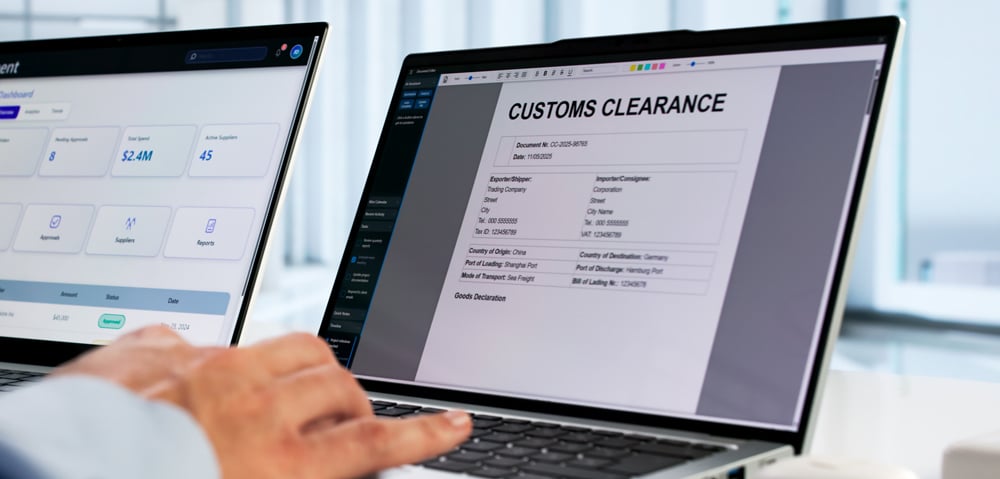
Accurate documentation is essential when shipping from Canada to Germany. Even with fast air freight transit, incomplete paperwork can delay Customs clearance (Zollabfertigung) and increase storage costs.
German Customs (Zoll) requires clear and precise information for all commercial imports.
Commercial Invoice (Handelsrechnung)
The Commercial Invoice (Handelsrechnung) is the primary customs document. It allows authorities to:
- Assess customs duties
- Calculate Import VAT (Einfuhrumsatzsteuer)
- Verify product classification
- Confirm declared value
A complete Commercial Invoice should include:
- Exporter and importer details
- Importer’s EORI number
- Detailed product descriptions
- HS code for each item
- Country of origin
- Quantity and value
- Agreed Incoterms
Generic descriptions increase the risk of inspection or delay.
Air Waybill (Frachtbrief)
The Air Waybill (Frachtbrief) serves as:
- Proof of shipment
- Transport contract
- Tracking reference
It includes routing details, shipment weight, and cargo description. Although not a document of title, it is required for cargo release.
Packing List
A packing list outlines:
- Package contents
- Number of cartons or pallets
- Net and gross weight
- Dimensions
Customs authorities may use this document during inspection to verify shipment details.
HS Codes (Harmonized System Codes)
The Harmonized System code (HS code) classifies goods for customs purposes.
Accurate HS classification determines:
- Applicable duty rate
- Import restrictions
- Regulatory requirements
Incorrect HS codes can result in duty miscalculation or clearance delays.
Certificate of Origin
A Certificate of Origin may be required when claiming reduced duties under trade agreements such as CETA.
This document confirms that goods qualify for preferential treatment based on origin.
EORI Number
For commercial imports into Germany, the importer must typically provide an Economic Operators Registration and Identification number (EORI number).
The EORI number is required for:
- Customs declarations
- Duty processing
- Import VAT (Einfuhrumsatzsteuer) assessment
Without a valid EORI number, business shipments cannot be cleared.
Documentation Best Practices
To ensure smooth Customs clearance (Zollabfertigung):
- Use detailed product descriptions
- Confirm HS codes before shipping
- Verify declared values
- Ensure all documents match shipment contents
- Clearly state Incoterms
Proper documentation preparation protects both transit time and cost control.
What Cannot Be Shipped from Canada to Germany?

Before arranging shipping from Canada to Germany, businesses must confirm that their goods comply with German and European Union import regulations. Certain items are prohibited entirely, while others are restricted and require special approval.
Non-compliance can result in shipment seizure, fines, or delays during Customs clearance (Zollabfertigung) by German Customs (Zoll).
Prohibited Goods
Prohibited items cannot be imported into Germany under any circumstances. These typically include:
- Counterfeit or pirated goods
- Illegal narcotics and controlled substances
- Certain weapons
- Hazardous waste
- Restricted wildlife products
German regulations align with broader European Union trade laws.
Restricted Goods
Restricted goods may be imported but require additional permits, certifications, or regulatory approval.
Common restricted categories include:
- Pharmaceutical products
- Medical devices
- Food products and supplements
- Chemicals
- Lithium batteries
- Hazardous materials
Air freight shipments containing regulated goods must meet aviation and safety standards.
Dangerous Goods by Air
Dangerous goods transported by air must comply with international aviation regulations.
Examples include:
- Flammable liquids
- Compressed gases
- Corrosive substances
These shipments require:
- Certified packaging
- Proper labeling
- Dangerous goods declarations
Non-compliant shipments are typically refused before departure.
Packaging and Environmental Compliance
Germany enforces packaging regulations under the Packaging Act (Verpackungsgesetz).
Importers distributing goods in Germany may need to:
- Register packaging materials
- Participate in recycling systems
- Report packaging usage
While this requirement mainly affects importers, exporters should be aware of packaging compliance obligations.
Avoiding Compliance Issues
To reduce risk when shipping from Canada to Germany:
- Confirm product eligibility before booking
- Verify regulatory requirements
- Provide accurate product descriptions
- Ensure documentation aligns with shipment contents
Clear and precise information reduces inspection risk and helps maintain predictable delivery timelines.
Shipping Commercial Goods from Canada to Germany
Most trade between Canada and Germany involves commercial cargo rather than small parcels. Businesses exporting machinery, automotive parts, electronics, pharmaceuticals, and retail inventory require structured air freight solutions designed for larger, formal shipments.
Shipping commercial goods from Canada to Germany requires planning beyond transportation. Exporters must consider documentation, duties, Import VAT (Einfuhrumsatzsteuer), and inventory flow.
Common Commercial Shipments
Canadian businesses frequently ship:
- Automotive components
- Industrial machinery and parts
- Electronics and high-value equipment
- Aerospace products
- Pharmaceutical goods
- eCommerce inventory
These shipments are typically palletized and handled through formal air cargo channels rather than parcel services.
Why Air Freight Supports Business Operations
Air freight helps businesses:
- Reduce production downtime
- Replenish inventory quickly
- Respond to demand fluctuations
- Improve customer service timelines
Shorter transit time also reduces capital tied up in inventory.
For high-value goods, faster delivery lowers exposure to loss or damage.
eCommerce Expansion into Germany
Many Canadian eCommerce brands use air freight to enter the German market. Bulk inventory can be shipped to fulfillment centers or distribution hubs for faster local delivery.
When shipping commercial inventory, exporters must:
- Forecast duties and Import VAT (Einfuhrumsatzsteuer)
- Ensure correct HS classification
- Confirm importer EORI requirements
Proper planning reduces customs delays and protects customer experience.
Commercial Freight vs Courier Shipments
Commercial air freight differs from courier parcel services.
Commercial shipments typically involve:
- Higher weight thresholds
- Formal customs declarations
- Detailed Commercial Invoice (Handelsrechnung)
- Air Waybill (Frachtbrief) documentation
For recurring shipments, structured freight planning improves cost predictability and delivery reliability.
Supporting Long-Term Growth
For businesses shipping regularly from Canada to Germany, air freight becomes part of a broader European logistics strategy.
Efficient cargo management supports:
- Market expansion
- Reliable supply chains
- Competitive delivery timelines
- Margin protection
When managed correctly, air freight is not only a transportation method but a strategic business tool.
Air Freight vs Ocean Freight from Canada to Germany
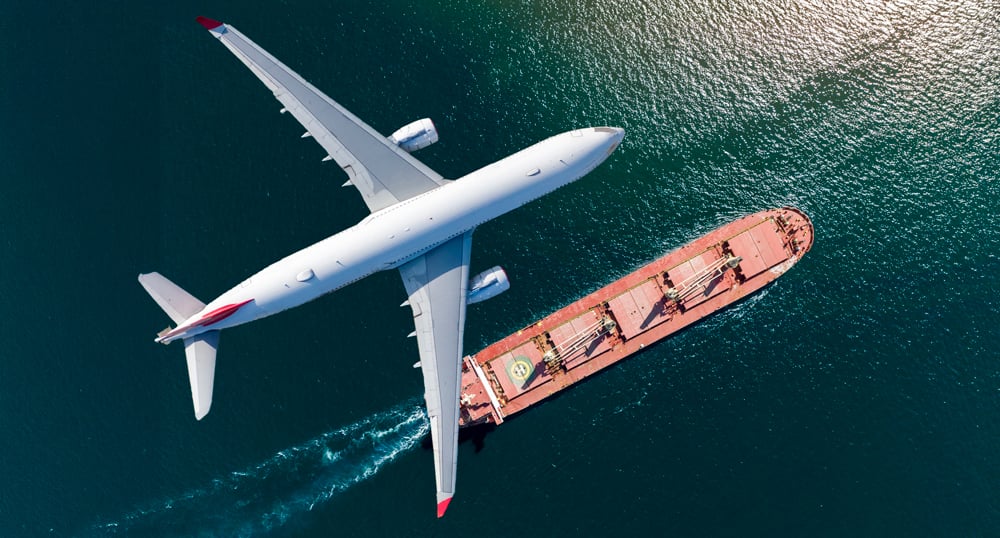
When shipping from Canada to Germany, businesses often compare air freight and ocean freight. The right choice depends on urgency, shipment size, and overall logistics strategy.
Speed Comparison
Air freight typically delivers within 2 to 7 business days.
Ocean freight can take 3 to 6 weeks, depending on routing and port schedules.
For time-sensitive or high-value shipments, air freight offers a clear advantage in speed and predictability.
Cost Considerations
Ocean freight is generally more economical for very large, heavy shipments.
Air freight pricing is based on chargeable weight, fuel surcharges, and airport handling fees.
For small to medium commercial shipments, the difference in total landed cost may narrow when inventory carrying costs and delivery urgency are considered.
Shipment Size and Suitability
Air freight is best suited for:
- Palletized cargo
- High-value goods
- Time-sensitive inventory
Ocean freight is more appropriate for:
- Large volume cargo
- Heavy industrial equipment
- Non-urgent stock replenishment
Risk and Handling
Air freight involves fewer handling stages and shorter transit exposure.
Ocean freight involves longer transit times and potential port congestion.
For businesses prioritizing speed, reliability, and inventory turnover, air freight is often the preferred option when shipping from Canada to Germany.
How to Reduce Air Freight Costs from Canada to Germany

Air freight is valued for speed and reliability, but businesses can take practical steps to reduce shipping costs when moving goods from Canada to Germany.
Cost control is not only about negotiating rates. It involves improving efficiency across packaging, planning, and service selection.
Optimize Packaging
Air freight is billed using the greater of actual weight or dimensional weight.
To reduce chargeable weight:
- Minimize unused space in cartons
- Use compact pallet configurations
- Avoid oversized packaging
- Remove unnecessary packing material
Even small packaging improvements can lower freight cost.
Consolidate Shipments
Sending multiple small shipments increases handling fees and documentation costs.
When possible:
- Combine shipments
- Schedule recurring departures
- Ship in higher weight brackets
Consolidation often reduces per-kilogram pricing.
Select the Appropriate Service Level
Not every shipment requires express delivery.
Standard air freight typically offers a lower rate while still maintaining reliable transit time.
Balancing urgency and cost improves overall margin control.
Plan Around Peak Seasons
Air freight rates increase during high-demand periods.
To manage costs:
- Forecast inventory in advance
- Avoid last-minute bookings
- Schedule shipments outside peak seasons when possible
Proactive planning reduces exposure to surge pricing.
Ensure Documentation Accuracy
Errors in documentation can result in:
- Customs delays
- Storage fees
- Additional clearance charges
Providing a complete Commercial Invoice (Handelsrechnung) and correct HS codes supports smoother Customs clearance (Zollabfertigung) and prevents avoidable costs.
Compare Carrier Options
Air freight rates vary between carriers based on routing and capacity.
Comparing multiple carrier options helps:
- Identify competitive pricing
- Select optimal transit schedules
- Maintain flexibility during capacity shifts
Rate transparency supports better shipping decisions.
Long-Term Freight Planning
Businesses shipping regularly to Germany benefit from:
- Standardized export documentation
- Volume-based rate agreements
- Predictable shipment schedules
Structured planning improves cost efficiency over time.
Why Use Freightcom for Shipping from Canada to Germany
.jpg?width=1000&height=543&name=freightcom-shipping-canada-germany%20(1).jpg)
Choosing the right logistics partner is essential when shipping from Canada to Germany. Businesses need reliable transit, competitive pricing, and structured customs support to manage international air freight efficiently.
Air freight moves quickly, but without proper coordination, pricing transparency, and documentation accuracy, shipments can become costly or delayed.
Access Real-Time Air Freight Rates
Air freight pricing changes based on demand, fuel costs, and capacity.
Instead of requesting quotes from multiple providers individually, businesses benefit from:
- Real-time rate comparison
- Transparent pricing breakdown
- Side-by-side carrier options
- Immediate service visibility
This allows faster, more informed shipping decisions.
Multi-Carrier Flexibility
Different carriers offer varying strengths in pricing, routing, and capacity.
Access to multiple air freight providers helps businesses:
- Maintain competitive pricing
- Secure space during peak periods
- Balance speed and cost
- Improve delivery reliability
Flexibility reduces dependence on a single carrier.
Customs and Documentation Support
Smooth Customs clearance (Zollabfertigung) depends on accurate documentation.
Structured freight solutions help ensure:
- Commercial Invoice (Handelsrechnung) compliance
- Correct HS code usage
- Clear Incoterms selection
- Proper Import VAT (Einfuhrumsatzsteuer) planning
Reducing documentation errors minimizes clearance delays and unexpected charges.
Competitive Air Freight Pricing
Frequent shippers may benefit from negotiated carrier discounts.
Leveraging aggregated carrier networks can:
- Reduce per-kilogram cost
- Improve rate stability
- Support long-term shipping growth
This is particularly valuable for businesses exporting regularly to Germany.
Simplified Shipment Management
International air freight involves coordination between pickup, airport handling, customs processing, and final delivery.
Centralized shipment management tools provide:
- Real-time tracking
- Digital document access
- Shipment history
- Improved operational visibility
Visibility enhances planning and customer communication.
Get a Quote for Shipping from Canada to Germany
To receive accurate pricing, provide:
- Weight and dimensions
- Pickup and delivery locations
- Service level preference
- Incoterms
Access to multi-carrier air freight options and customs support helps businesses ship confidently and efficiently to Germany.
Frequently Asked Questions About Shipping from Canada to Germany
How much does it cost to ship from Canada to Germany?
Shipping from Canada to Germany is priced based on chargeable weight, service level, and customs charges. Air freight rates use the greater of actual or dimensional weight. In addition to transportation cost, shipments are subject to customs duties and Import VAT (Einfuhrumsatzsteuer), typically 19 percent in Germany. Fuel surcharges and handling fees may also apply.
In short, total landed cost includes freight, duties, VAT, and documentation fees.
How long does shipping from Canada to Germany take?
Air freight from Canada to Germany usually takes 2 to 7 business days. Express services can deliver within 2 to 4 business days, while standard air freight typically takes 3 to 7 days. Transit time includes export handling, flight time, Customs clearance (Zollabfertigung), and final delivery.
Air freight is significantly faster than ocean freight, which can take several weeks.
What is Import VAT in Germany?
Import VAT (Einfuhrumsatzsteuer) is a tax applied to goods entering Germany from non-EU countries. The standard rate is 19 percent for most goods. It is calculated based on the total customs value, including product value, freight cost, insurance, and customs duties. Import VAT is collected during Customs clearance (Zollabfertigung) by German Customs (Zoll).
Do I need an EORI number to ship to Germany?
Commercial importers in Germany typically require an Economic Operators Registration and Identification number (EORI number). This number is mandatory for customs declarations and duty processing. Without it, business shipments cannot be cleared by German Customs (Zoll). Private individuals usually do not require an EORI number for personal shipments.
What documents are required for shipping from Canada to Germany?
Most commercial shipments require a Commercial Invoice (Handelsrechnung), Air Waybill (Frachtbrief), packing list, correct HS codes, and the importer’s EORI number. Additional certificates may be required depending on product type. Accurate documentation ensures faster Customs clearance (Zollabfertigung).
What is the fastest way to ship to Germany from Canada?
The fastest method is express air freight. Express service prioritizes cargo handling and reduces transit time to approximately 2 to 4 business days. It is ideal for urgent or high-value shipments.
What is the difference between DDP and DAP shipping?
Delivered Duty Paid (DDP) means the seller pays customs duties and Import VAT (Einfuhrumsatzsteuer) before delivery. Delivered at Place (DAP) means the buyer pays duties and VAT upon arrival in Germany. The choice affects pricing structure and customer experience.
Are there duties on goods shipped from Canada to Germany?
Customs duties may apply depending on HS classification and country of origin. Under the Comprehensive Economic and Trade Agreement (CETA), some Canadian-origin goods may qualify for reduced or zero duty if properly documented.
What items cannot be shipped to Germany?
Prohibited goods include counterfeit products, illegal narcotics, and certain hazardous materials. Restricted goods such as pharmaceuticals, food products, and lithium batteries may require additional permits. All imports must comply with German Customs (Zoll) regulations.
How is air freight cost calculated?
Air freight cost is calculated using chargeable weight, which is the greater of actual weight or dimensional weight. Additional costs may include fuel surcharges, handling fees, customs duties, and Import VAT (Einfuhrumsatzsteuer).
How can I reduce air freight costs?
Air freight costs can be reduced by optimizing packaging, consolidating shipments, selecting standard service instead of express when possible, and comparing carrier options. Accurate documentation also prevents delays and extra clearance charges.
Shipping from Canada to Germany: Final Steps & Getting a Quote
Shipping from Canada to Germany involves more than booking air freight. Businesses must account for transit time, customs procedures, Import VAT (Einfuhrumsatzsteuer), documentation accuracy, and Incoterms selection.
When these elements are managed properly, international shipping becomes predictable and cost-controlled.
Throughout this guide, we’ve covered:
- Air freight options and transit time
- Shipping cost structure and landed cost
- Customs clearance (Zollabfertigung) requirements
- Import VAT and duty assessment
- Required documentation such as the Commercial Invoice (Handelsrechnung) and Air Waybill (Frachtbrief)
- Restricted goods regulations
- Commercial and B2B shipping considerations
- Cost optimization strategies
Together, these factors determine how efficientl
y goods move from Canada to Germany.
Shipping as Part of a European Strategy
Germany often serves as a gateway to the broader European Union market. Businesses shipping to Germany may later expand into other EU countries using similar air freight frameworks.
A structured logistics strategy supports:
- Faster market entry
- Reliable supply chains
- Consistent delivery timelines
- Margin protection
Planning shipping from Canada to Germany with scalability in mind supports long-term growth.
Get a Quote for Shipping from Canada to Germany
Accurate pricing requires:
- Weight and dimensions
- Pickup and delivery locations
- Service level preference
- Selected Incoterms
Access to multi-carrier air freight options, transparent rate comparison, and customs guidance simplifies international shipping decisions.
Whether shipping occasional pallets or recurring commercial cargo, proper preparation ensures smooth delivery and predictable cost.


.png?width=250&height=58&name=MicrosoftTeams-image%20(28).png "Freightcom")


