
For businesses across North America, from agile eCommerce brands to established B2B distributors, the stretch from early August through mid-December represents a massive window of opportunity. Frequently known as Peak Season, this high-stakes period is driven by a convergence of major consumer shopping events: back-to-school preparations, Halloween merchandising, Black Friday, Cyber Monday, and the ultimate year-end holiday rush.
However, beneath the promise of record-breaking sales volumes lies a notoriously complex and high-pressure logistics environment. When consumer demand surges simultaneously across multiple channels, structural supply chain vulnerabilities are quickly exposed. Capacity constraints, fluctuating carrier rates, congested fulfillment hubs, and tighter delivery windows can easily overwhelm businesses that react too late.
To safeguard your profit margins, maintain operational continuity, and protect your brand reputation, your freight strategy cannot wait until the rush is already underway. Proactive, forward-looking logistics planning is the ultimate differentiator between thriving during the holidays and scrambling to keep up. Here is a comprehensive look at why freight planning must start well before peak season, and how Freightcom empowers your business to stay ahead of the curve.
What Is Peak Season in Logistics?
To understand why early preparation is non-negotiable, it is vital to define what peak season entails. In the North American supply chain, peak season is the extended annual timeframe running from early August through mid-December. During this window, retailers, wholesalers, and manufacturers rapidly scale up production, inventory positioning, and outbound shipping to meet heavy seasonal demand.
The catalysts are well-known:
- Back-to-School and Fall Transition (August – September): Millions of students return to classrooms, driving heavy retail restocking across apparel, electronics, and supplies.
- Q4 Holiday Shopping (October – December): The retail marathon kicks off with Halloween and quickly escalates into Thanksgiving, Black Friday, Cyber Monday, and the December gift-giving rush.
During this period, freight traffic spikes dramatically. The sheer volume of goods moving through over-the-road trucking networks, intermodal rails, and air cargo puts immense, compounding pressure on carriers, drivers, sorting facilities, and final-mile delivery networks.
Why Early Freight Planning is Crucial
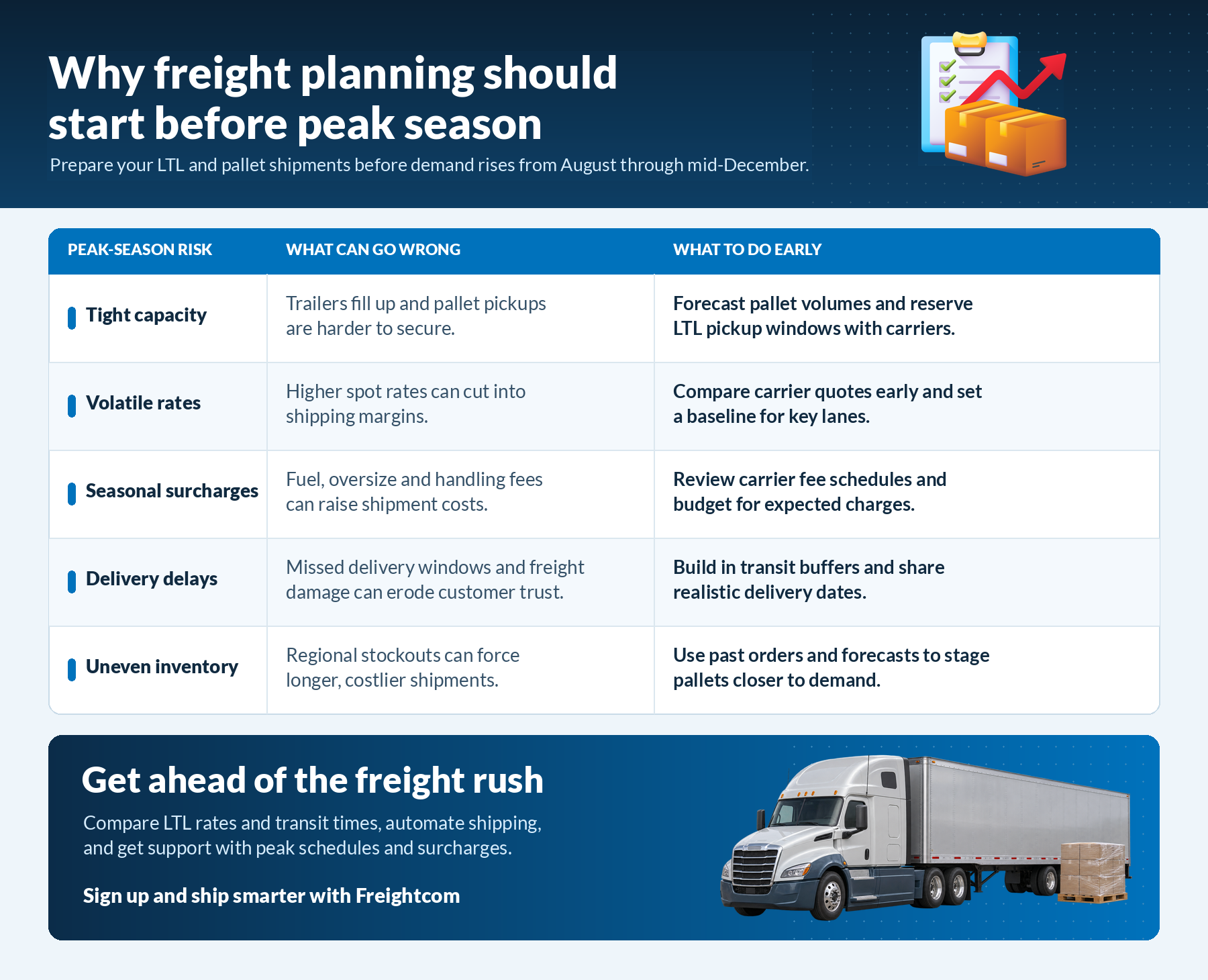
Waiting until shipment volumes peak to secure carrier capacity is one of the riskiest maneuvers a growing business can undertake. When demand vastly outstrips supply, the rules of the shipping market change overnight. Here are the core reasons why early freight planning is essential for operational success:
1. Mitigating Severe Capacity Shortages
As shipping volumes skyrocket across the board, carrier trucks, container space, and intermodal slots fill up at unprecedented speeds. Shippers who establish relationships and book capacity early lock down the reliable equipment they need. Conversely, latecomers often find themselves competing for scarce resources, leading to missed pickup windows, stalled freight, and unfulfilled customer orders.
2. Avoiding Steep Rate Volatility
Supply and demand imbalances inevitably drive up spot market rates. When capacity is tight, carriers hold pricing power, leading to dramatic cost spikes that can erode profit margins overnight. Proactive planning allows businesses to establish predictable rate baselines, negotiate contractual terms, and steer clear of the expensive reactive shipping traps that plague unprepared competitors.
3. Navigating Peak Surcharges Proactively
Major parcel and LTL carriers routinely introduce seasonal adjustments during the fourth quarter. These include peak residential delivery fees, additional handling charges, oversize surcharges, and fuel fluctuations. Advance planning gives your finance and logistics teams the visibility needed to factor these unavoidable expenses into product pricing models and operational budgets, rather than absorbing unexpected financial hits mid-season.
4. Protecting Customer Experience and Brand Loyalty
In the modern marketplace, customer expectations for speed and transparency are higher than ever. Late deliveries, damaged goods, and communication breakdowns during the holidays can permanently damage customer trust and trigger costly chargebacks or negative reviews. When inventory is strategically pre-positioned and freight is booked ahead of time, you ensure smooth, reliable fulfillment that turns seasonal shoppers into lifelong brand advocates.
5. Optimizing Inventory Distribution and Warehousing
Peak season planning extends beyond transportation; it involves intelligent inventory management. By analyzing historical shipping data and sales forecasts ahead of time, businesses can pre-position inventory closer to core consumer demographics using regional distribution hubs. This minimizes long-haul transit times and reduces the likelihood of localized stockouts.
How Freightcom Simplifies Peak Season Success
Navigating the complexities of peak season does not have to mean drowning in spreadsheets, enduring endless phone calls with carriers, or guessing at fluctuating market rates. Freightcom provides the comprehensive tools, advanced technology, and dependable carrier networks that businesses need to streamline shipping operations year-round:
- Comprehensive Multi-Carrier Access: Gain instant access to a vast network of vetted, dependable LTL (Less-Than-Truckload) and parcel carrier partners. This flexibility allows you to compare competitive rates, choose optimal transit times, and pivot quickly if carrier disruptions occur.
- Advanced Shipping Automation: Leverage time-saving software features—such as automated address validation, smart batch shipping, and seamless e-commerce platform integrations—to eliminate manual data entry errors and accelerate warehouse fulfillment workflows.
- Transparent Shipping Insights and Support: Stay fully informed on critical peak schedules, carrier holiday closures, and upcoming surcharge timelines. With expert customer support and actionable analytics, Freightcom helps you map out your shipping calendars with total confidence.
Don't let peak season catch your supply chain off guard. Connect with Freightcom today to build a smarter, resilient, and stress-free shipping strategy ahead of the rush!